Best Microphone for Recording Vocals at Home: 10 Top
Picks
Whether you're laying down vocal chops for your next track or recording full toplines for an EDM production, your microphone choice makes or breaks the final result. Finding the best microphone for recording vocals at home doesn't have to mean spending thousands, but it does mean knowing what actually matters for your setup and goals.
At RIKIO ROCKS, we cover every corner of the electronic dance music scene, from festival lineups and rising DJs to the gear that producers rely on in their home studios. Vocals are a huge part of modern EDM, think of every progressive house anthem, every drum and bass roller with a soulful hook. Behind those tracks is a producer (or vocalist) who captured something real with the right microphone in a treated room.
This guide breaks down 10 microphones worth your money in 2026, spanning entry-level condensers to professional-grade options that compete with studio rentals. We tested and compared each pick based on sound quality, build, connectivity, and how well they handle the common challenges of home recording, like room noise and proximity effect. You'll also find a buyer's guide section to help you match a mic to your budget, experience level, and recording style.
Let's get into it.
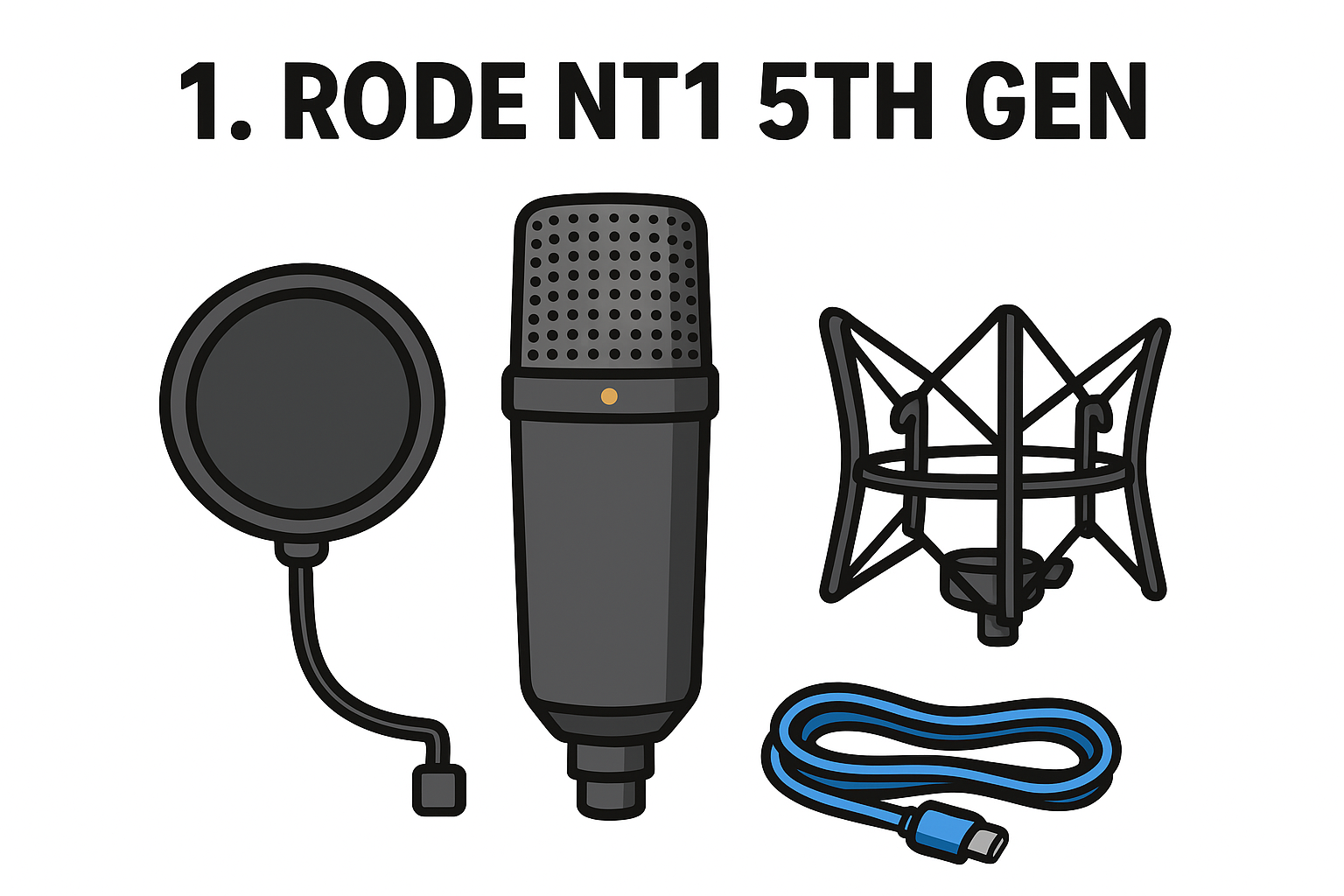
1. Rode NT1 5th Gen
The Rode NT1 5th Gen sits at the top of this list because it solves most of the core problems home vocal recording creates. It combines professional-level noise performance with a dual-connection design that works whether you own an audio interface or not. For anyone searching for the best microphone for recording vocals at home in 2026, this mic covers beginners and serious producers alike.
Why it works at home
Few mics handle the unpredictable conditions of a home studio as well as the NT1 5th Gen. Its self-noise rating of just 4dB EIN is genuinely exceptional, meaning it captures your vocals with almost no audible hiss, even in a quiet or lightly treated room. Most home setups aren't acoustically perfect, and a low noise floor gives you more flexibility when processing vocals in your DAW.
A 4dB EIN self-noise rating puts the NT1 5th Gen among the quietest large-diaphragm condenser microphones available at any price point.
Rode also includes the SM6 shock mount and integrated pop filter in the box. You get a complete recording package on day one without buying accessories separately, which is rare at this price.
What you need to use it
Connecting via USB-C requires nothing more than a cable and a computer, making it a plug-and-play option for beginners who don't yet own an audio interface. If you prefer the XLR route, you'll need an audio interface that supplies 48V phantom power, since the NT1 5th Gen is a condenser microphone that requires it.
|
Connection
|
Required Gear
|
|
USB-C
|
Cable (included) + computer
|
|
XLR
|
Audio interface with 48V phantom power + XLR cable
|
What it sounds like on vocals
The NT1 5th Gen delivers a clean, detailed, and slightly extended high-frequency response that adds presence to vocals without sounding harsh or over-hyped. It captures the full range of a voice, from low chest resonance up through the crispness of sibilant consonants.
Producers tracking EDM toplines, melodic house hooks, or drum and bass features will find this mic flatters most voice types without requiring heavy EQ correction afterward. It's transparent enough to let character come through, while still polishing the overall tone.
Typical price range
The Rode NT1 5th Gen retails between $249 and $269 USD at most major retailers. That price includes the SM6 shock mount, pop filter, dust cover, and USB-C cable, making the overall value strong compared to similarly priced condensers that ship with nothing extra.
- Street price: $249 to $269 USD
- Included accessories: SM6 shock mount, pop filter, dust cover, USB-C cable
- Warranty: 10-year extended warranty when registered with Rode
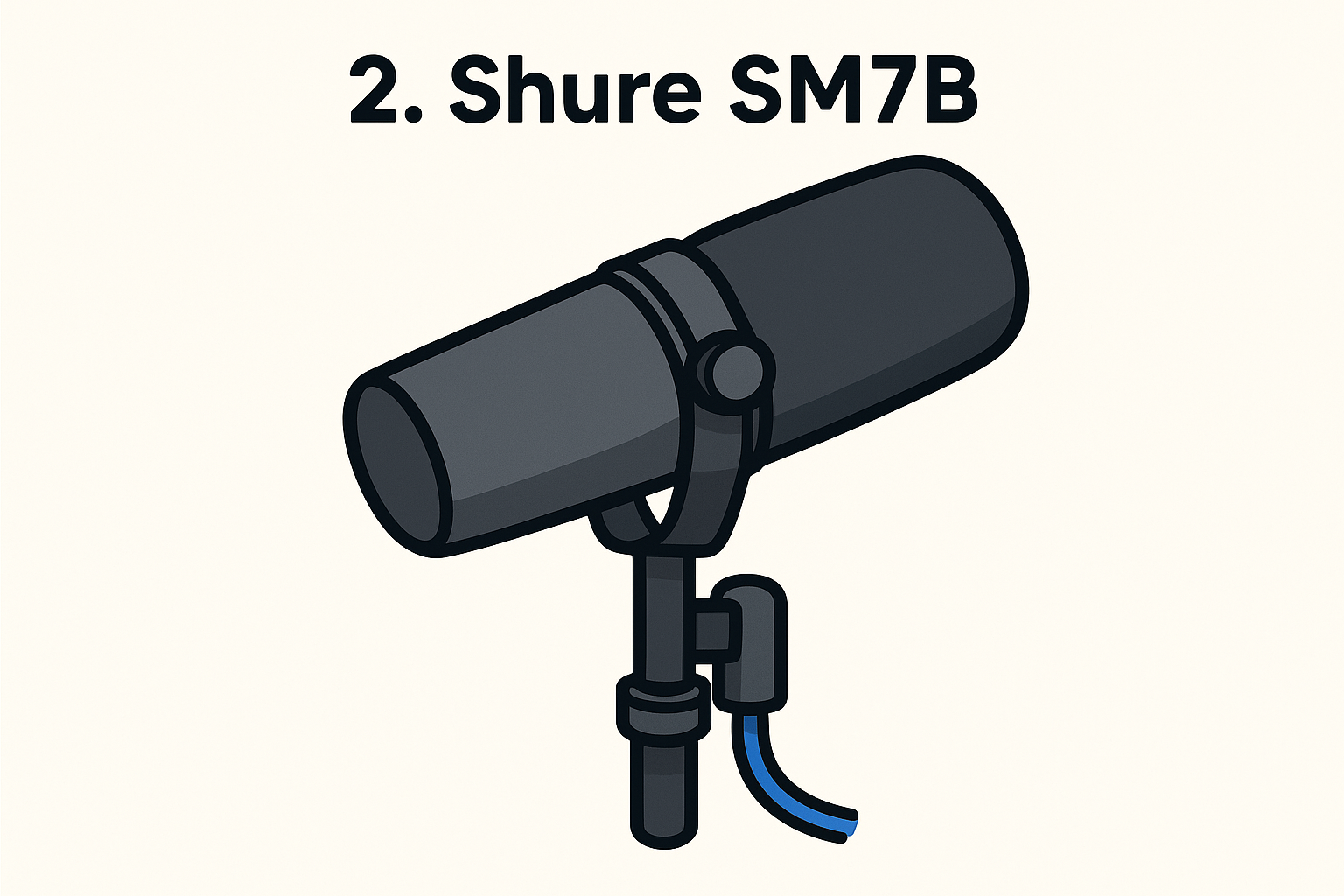
2. Shure SM7B
The Shure SM7B is a dynamic microphone that has earned a permanent spot in both professional broadcast studios and home setups. It's one of the most recognized vocal mics in the world, and for good reason: it handles room noise far better than most condensers, making it a reliable pick if your home recording space isn't treated.
Why it works at home
The SM7B uses a cardioid dynamic capsule that naturally rejects off-axis sound, meaning it focuses on what's directly in front of it and ignores most of the room around it. This makes it one of the best microphones for recording vocals at home in untreated or semi-treated spaces. Its built-in air suspension shock isolation also reduces mechanical vibration without requiring a separate shock mount.
If your recording room has hard walls, parallel surfaces, or minimal treatment, the SM7B's rejection pattern gives you a significant advantage over most condenser options at a similar price.
What you need to use it
Since the SM7B is an XLR-only microphone with no USB output, you need an audio interface to connect it to your computer. It also has a relatively low output level, which means you'll want an interface with a high-gain preamp or a separate inline preamp booster to get a clean, loud signal without introducing noise.
What it sounds like on vocals
Vocals through the SM7B come out warm, smooth, and slightly mid-forward, which works particularly well for deep or powerful voices. The mic adds natural body and softens harsh high frequencies, which can flatter singers recording EDM toplines or spoken-word content. Sibilance and harshness are noticeably reduced compared to most condensers used in the same untreated room.
Typical price range
The SM7B retails around $399 USD at major retailers. That price does not include an audio interface or preamp booster, so factor both into your total budget before buying.
- Street price: approximately $399 USD
- Included accessories: two swappable windscreens (close-talk and general)
- Connection: XLR only
3. Shure MV7+
The Shure MV7+ is a hybrid dynamic microphone that bridges the gap between plug-and-play simplicity and professional audio quality. It suits vocalists and producers who want flexibility without added complexity in their home setup, and its cardioid design handles room noise with the same directional focus that makes dynamic mics a practical home recording choice.
Why it works at home
Its cardioid dynamic capsule rejects side and rear noise naturally, making it forgiving in rooms with little or no acoustic treatment. Shure built onboard touch controls directly into the mic body, so you can adjust gain and monitor mix without navigating your DAW every time. For anyone searching for the best microphone for recording vocals at home on a streamlined setup, the MV7+ removes the friction points that often slow beginners down.
The ShurePlus MOTIV app also gives you EQ presets and level control on your phone or computer, letting you shape tone before the signal even reaches your recording software.
What you need to use it
One of the MV7+'s biggest practical strengths is its dual USB-C and XLR output. Connect via USB-C and you are recording directly to your computer with no interface required. Switch to XLR and it pairs with any standard audio interface.
|
Connection
|
Required Gear
|
|
USB-C
|
Cable + computer
|
|
XLR
|
Audio interface + XLR cable
|
What it sounds like on vocals
Vocals through the MV7+ carry warmth and controlled body, similar in character to the SM7B but with a slightly tighter low end. The dynamic capsule reduces harsh sibilance and room reflections compared to most condensers in untreated spaces, which means less corrective EQ work in your mix.
The MV7+ delivers a broadcast-ready tone straight out of the box, making it one of the more practical dynamic mics at this price point.
Typical price range
The MV7+ retails around $249 USD at major retailers, and that price includes the USB-C cable and a mic stand adapter.
- Street price: approximately $249 USD
- Connection: USB-C and XLR
- Included accessories: USB-C cable, mic stand adapter
4. Audio-Technica AT2035
The Audio-Technica AT2035 is a large-diaphragm condenser microphone that hits a practical sweet spot between affordability and performance. For home producers and vocalists searching for the best microphone for recording vocals at home without spending past the $150 mark, the AT2035 delivers consistent results that hold up well in a mix.
Why it works at home
Its cardioid polar pattern focuses pickup directly in front of the capsule and rejects sound from the sides and rear, giving it a natural advantage in home environments where reflections from walls and hard surfaces can bleed into your recording. A built-in switchable high-pass filter at 80Hz also cuts low-frequency rumble from air conditioning, foot traffic, and other common household noise sources before they even reach your interface.
The high-pass filter alone saves you significant corrective EQ time in post, which matters when you are mixing a full EDM production with multiple layers.
What you need to use it
The AT2035 is an XLR-only condenser, so you need an audio interface that supplies 48V phantom power to run it. It ships with a custom shock mount that keeps handling noise and desk vibration out of your recordings, which removes one extra purchase from your setup list.
What it sounds like on vocals
Vocals through the AT2035 come across as detailed and moderately bright without the exaggerated top-end shimmer that cheaper condensers often produce. It captures clarity across the mid and upper frequencies while maintaining a solid low-mid foundation, making it a reliable choice for EDM toplines, background vocals, and spoken content alike.
Typical price range
The AT2035 retails between $129 and $149 USD at major retailers, and the included custom shock mount adds real value to that package.
- Street price: $129 to $149 USD
- Connection: XLR only
- Included accessories: custom shock mount, soft pouch
5. Audio-Technica AT2020
The Audio-Technica AT2020 is the entry point into the AT large-diaphragm condenser lineup, and it has held its position as one of the most recommended budget condensers for vocal recording for over a decade. If you want the best microphone for recording vocals at home without crossing the $100 mark, the AT2020 remains one of the most practical options in that price bracket.
Why it works at home
The AT2020 uses a cardioid polar pattern that focuses pickup directly in front of the capsule and rejects off-axis sound from the sides and rear. That directional behavior gives it a natural edge in home rooms with minimal acoustic treatment, where reflections from hard walls and surfaces would otherwise bleed into your vocal takes and create a washed-out, roomy sound.
Pairing the AT2020 with a basic reflection filter behind the mic can significantly reduce room coloration without requiring full acoustic panel treatment.
What you need to use it
This microphone is XLR-only, so you need an audio interface that supplies 48V phantom power to run it. The AT2020 ships with a stand mount adapter, though adding a basic shock mount separately is worth the small extra cost since it reduces desk vibration and stand handling noise from reaching the capsule.
What it sounds like on vocals
Vocals through the AT2020 carry a clear, forward midrange with a modest top-end lift that adds presence and air. It performs particularly well on brighter or mid-range voices in EDM toplines and melodic hooks, where that extra presence helps the vocal sit above a dense mix without heavy EQ boosting in your DAW.
Typical price range
The AT2020 retails around $99 USD at major retailers, making it one of the most accessible large-diaphragm condensers available anywhere.
- Street price: approximately $99 USD
- Connection: XLR only
- Included accessories: stand mount adapter, soft protective pouch
6. AKG C214
The AKG C214 is a large-diaphragm condenser microphone that draws its core design directly from the professional AKG C414 series. It gives home producers access to studio-grade condenser performance at a significantly lower price, making it a strong contender for anyone looking for the best microphone for recording vocals at home without jumping straight to a flagship model.
Why it works at home
Its cardioid polar pattern tightens pickup to the front of the capsule and rejects noise from the sides and rear, which helps control room reflections in untreated spaces. An integrated suspension system inside the mic body decouples the capsule from handling and stand vibration without requiring a separate shock mount.
This built-in suspension makes the C214 notably more practical for home setups where desk space and accessory budgets are limited.
What you need to use it
The C214 is an XLR-only condenser, so you need an audio interface that supplies 48V phantom power to run it. It ships with a carrying case and a basic mounting adapter, and it handles high sound pressure levels up to 156dB SPL, which gives you flexibility if you record more than vocals in your home setup.
What it sounds like on vocals
Vocals through the C214 carry a clean and open character with a controlled high-frequency presence that adds clarity without becoming harsh. Its extended transient response captures the subtle texture and detail of a vocal performance, from breathy falsetto passages to stronger chest voice, making it a natural fit for melodic EDM productions where every nuance in the topline matters.
Typical price range
The AKG C214 retails around $299 USD at major retailers, and the included carrying case and mounting adapter add practical value to that price.
- Street price: approximately $299 USD
- Connection: XLR only
- Included accessories: carrying case, mounting adapter
7. Aston Origin
The Aston Origin is a UK-built large-diaphragm condenser microphone that stands apart with its distinctive waveform mesh head and all-metal construction. It brings a level of build quality and sonic character to the home studio that typically costs significantly more from competing brands, and it earns a spot on this list as one of the best microphones for recording vocals at home in the sub-$200 range.
Why it works at home
The Origin's cardioid polar pattern keeps pickup focused on the source directly in front of it and naturally rejects off-axis room noise, which helps manage reflections in spaces that lack full acoustic treatment. Aston also built a spring-loaded pop shield directly into the mesh head, reducing plosive impact without requiring a separate pop filter accessory.
That integrated pop shield is a practical design choice that saves you money and simplifies your setup on day one.
What you need to use it
Since the Aston Origin is XLR-only, you need an audio interface that provides 48V phantom power to run it. It ships with a basic thread adapter, though a dedicated shock mount is worth adding separately since the Origin does not include one in the box.
What it sounds like on vocals
Vocals through the Origin carry a natural, full-bodied tone with a smooth top end that avoids the brittle harshness that cheaper condensers often introduce. Its extended low-mid response gives both male and female voices a sense of depth and presence, making it a strong fit for EDM toplines, backing vocals, and melodic features where warmth in the vocal chain matters.
For producers layering dense electronic arrangements, the Origin's controlled brightness helps vocals cut through without requiring aggressive high-frequency boosts in your DAW. Its transient response captures fine detail in a performance while remaining forgiving on imperfect takes.
Typical price range
Your budget stretches well with this mic. The Aston Origin retails around $199 USD at major retailers, which positions it competitively given its all-metal build and integrated pop shield.
- Street price: approximately $199 USD
- Connection: XLR only
- Included accessories: thread adapter
8. Shure SM58
The Shure SM58 is a cardioid dynamic microphone built for live performance, but it earns a legitimate spot on the best microphone for recording vocals at home list for one straightforward reason: it is nearly indestructible and affordable. If you are starting out and want a mic that you can also use on stage without owning two separate pieces of gear, the SM58 covers both without compromise.
Why it works at home
Its cardioid polar pattern naturally rejects sound from the sides and rear, which keeps room reflections and background noise out of your recordings. The built-in pneumatic shock-mount system reduces handling noise and stand vibration without requiring a separate accessory, making it a genuinely low-maintenance option for home setups where simplicity matters.
The SM58's directional design makes it forgiving in untreated rooms where a condenser would pick up every unwanted reflection and hum.
What you need to use it
The SM58 is XLR-only, so you need an audio interface with a standard XLR input to connect it to your computer. Unlike condenser microphones, it requires no phantom power, which means it works with virtually any interface or mixer without compatibility concerns.
What it sounds like on vocals
Vocals through the SM58 carry a warm and slightly mid-forward character with a presence boost in the upper midrange that helps voices cut through dense mixes. Its integrated ball-shaped grille acts as a pop filter, reducing plosive bursts from "p" and "b" sounds without a separate pop screen. It suits powerful, expressive vocal performances rather than delicate or breathy singing styles.
Typical price range
The SM58 retails around $99 USD at major retailers, making it one of the most affordable and versatile mics on this list.
- Street price: approximately $99 USD
- Connection: XLR only
- Included accessories: stand adapter, storage bag
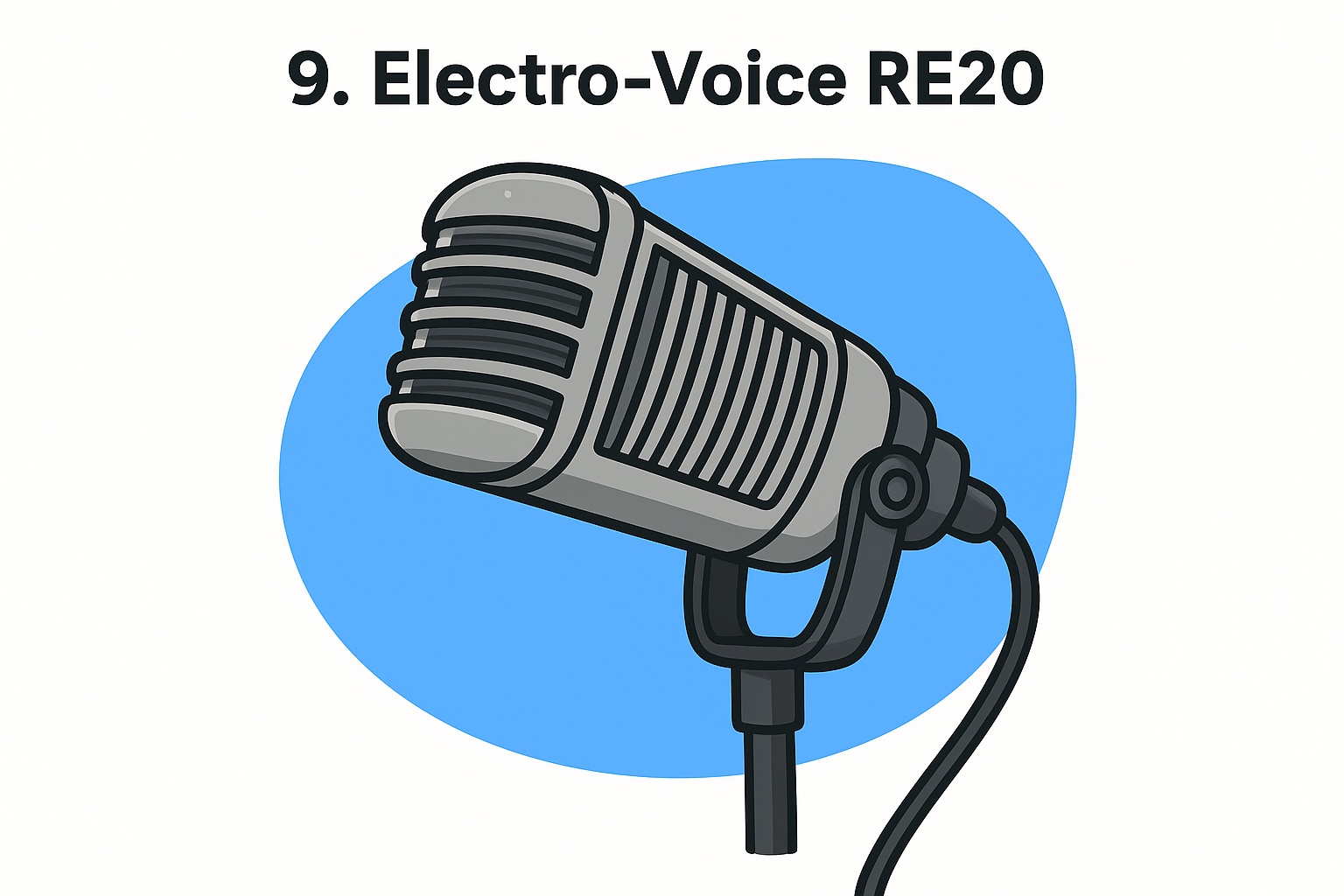
9. Electro-Voice RE20
The Electro-Voice RE20 is a broadcast-grade dynamic microphone that has been a recording and radio staple for decades. Its controlled, neutral character makes it a serious home studio option for producers who want professional-level vocal capture without the room sensitivity that condenser microphones introduce.
Why it works at home
Its Variable-D internal design dramatically reduces proximity effect, which is the low-frequency buildup that happens when you sing or speak close to most directional microphones. That reduction means your vocal tone stays consistent and controlled even when you naturally move back and forth during a take. For producers searching for the best microphone for recording vocals at home with broadcast-level consistency, the RE20 removes the positional guesswork entirely.
Variable-D proximity effect reduction gives you a stable, natural tone whether you record six inches or twelve inches from the capsule.
What you need to use it
Since the RE20 is an XLR-only dynamic microphone, you need an audio interface with a clean, high-gain preamp to drive it properly. No phantom power is required, but your preamp quality matters here because the RE20's output level runs relatively low compared to most condensers.
|
Connection
|
Required Gear
|
|
XLR
|
High-gain audio interface preamp + XLR cable
|
What it sounds like on vocals
Vocals through the RE20 carry a full-bodied midrange and smooth high-frequency rolloff that avoids harshness and sibilance buildup naturally. Deep and powerful voices benefit most from its character, and the controlled top end sits cleanly within dense EDM arrangements without competing with synth layers or pad textures occupying similar frequency space.
Typical price range
Retailing around $449 USD at major retailers, the RE20 sits at the higher end of this list's dynamic microphone options.
- Street price: approximately $449 USD
- Connection: XLR only
- Included accessories: stand adapter
10. AKG C414 XLII
The AKG C414 XLII is the professional flagship in this list and the most capable large-diaphragm condenser here. If you record diverse vocal styles across multiple projects, or if you want a microphone that won't limit your options as your skills develop, the C414 XLII delivers the kind of versatility and transparency that most home setups never outgrow.
Why it works at home
Nine selectable polar patterns give you precise control over how the microphone captures sound in your specific room. You can tighten the pickup to a pure cardioid for rejecting side and rear noise, or open it to a wider pattern when your space is better treated. That level of adaptability makes the C414 XLII one of the most flexible options for finding the best microphone for recording vocals at home across different room conditions.
Switchable polar patterns mean your microphone adapts to your room rather than forcing you to adapt your room to the microphone.
What you need to use it
The C414 XLII is XLR-only and requires 48V phantom power from your audio interface. Given its sensitivity and output level, most standard interfaces pair cleanly with it, and no additional preamp booster is needed.
|
Connection
|
Required Gear
|
|
XLR
|
Audio interface with 48V phantom power + XLR cable
|
What it sounds like on vocals
Vocals through the C414 XLII carry exceptional clarity and presence across the full frequency range. Its high-frequency extension captures..
321