What Is a Live Set? How It Differs From a DJ Set in
EDM
You've seen artists behind CDJs mixing tracks, but then you notice someone on stage surrounded by synthesizers, drum machines, and controllers, creating music from scratch. That's when you start wondering what is a live set and why it looks so different from everything else on the festival lineup. The distinction matters more than you might think, especially if you're trying to understand the artistry behind electronic music performance.
A live set represents something fundamentally different from pressing play or beatmatching pre-recorded tracks. Artists performing live sets build their music in real time, triggering samples, manipulating synthesizers, and sometimes incorporating acoustic instruments, all while reading the crowd. This approach demands technical skill and creative spontaneity that separates live performers from traditional DJs. Understanding this difference helps you appreciate what you're actually witnessing when you see names like Bonobo, Moderat, or Four Tet listed as "live" on a lineup.
At RIKIO ROCKS, we cover every angle of the EDM scene, from festival announcements to the gear artists use on stage. This guide breaks down exactly what defines a live set, how it contrasts with DJ sets, and why this performance style continues to push electronic music forward. Whether you're a fan trying to decode lineup distinctions or an aspiring producer curious about performing your own music, you'll walk away with a clear understanding of what makes live sets unique.
What a live set means in EDM
A live set involves creating music in real time during the performance rather than simply playing back finished tracks. When you ask what is a live set, you're looking at a situation where the artist triggers original samples, loops, and sounds through hardware synthesizers, drum machines, samplers, or software controllers like Ableton Live. The performer arranges these elements on the fly, layering basslines over drum patterns, adding melodic sequences, and adjusting effects while standing in front of the audience.
"Live electronic music performance means the artist controls when each sound starts, stops, and how it evolves throughout the set."
The core components of live performance
Your typical live set revolves around pre-prepared project files that contain stems, loops, and MIDI patterns the artist created in the studio. These files don't represent finished songs but rather building blocks the performer can manipulate. Artists launch clips in different combinations, adjust tempo on the spot, and modify filters, reverb, or distortion to match the room's energy. This approach allows for spontaneous variation while maintaining the artist's signature sound.
Real-time manipulation and creative control
The magic happens when performers reshape their own productions during the show. You might hear an artist extend a breakdown for two extra minutes because the crowd needs time to build energy, or cut straight to the drop when the room reaches peak excitement. They can mute vocal tracks, loop a synth pattern longer than the studio version, or completely rearrange song structure based on what they feel in the moment. This creative freedom separates live sets from any form of playback.
Original material and authenticity
Live sets typically feature the artist's own productions exclusively or predominantly. You won't hear other people's tracks mixed together like you would at a traditional DJ set. Instead, performers showcase their catalog in ways that differ from the recorded versions. This requirement means artists need substantial original material before they can even consider performing live. The authenticity comes from experiencing music directly from its creator, performed with the flexibility that studio recordings can't capture.
How a live set differs from a DJ set
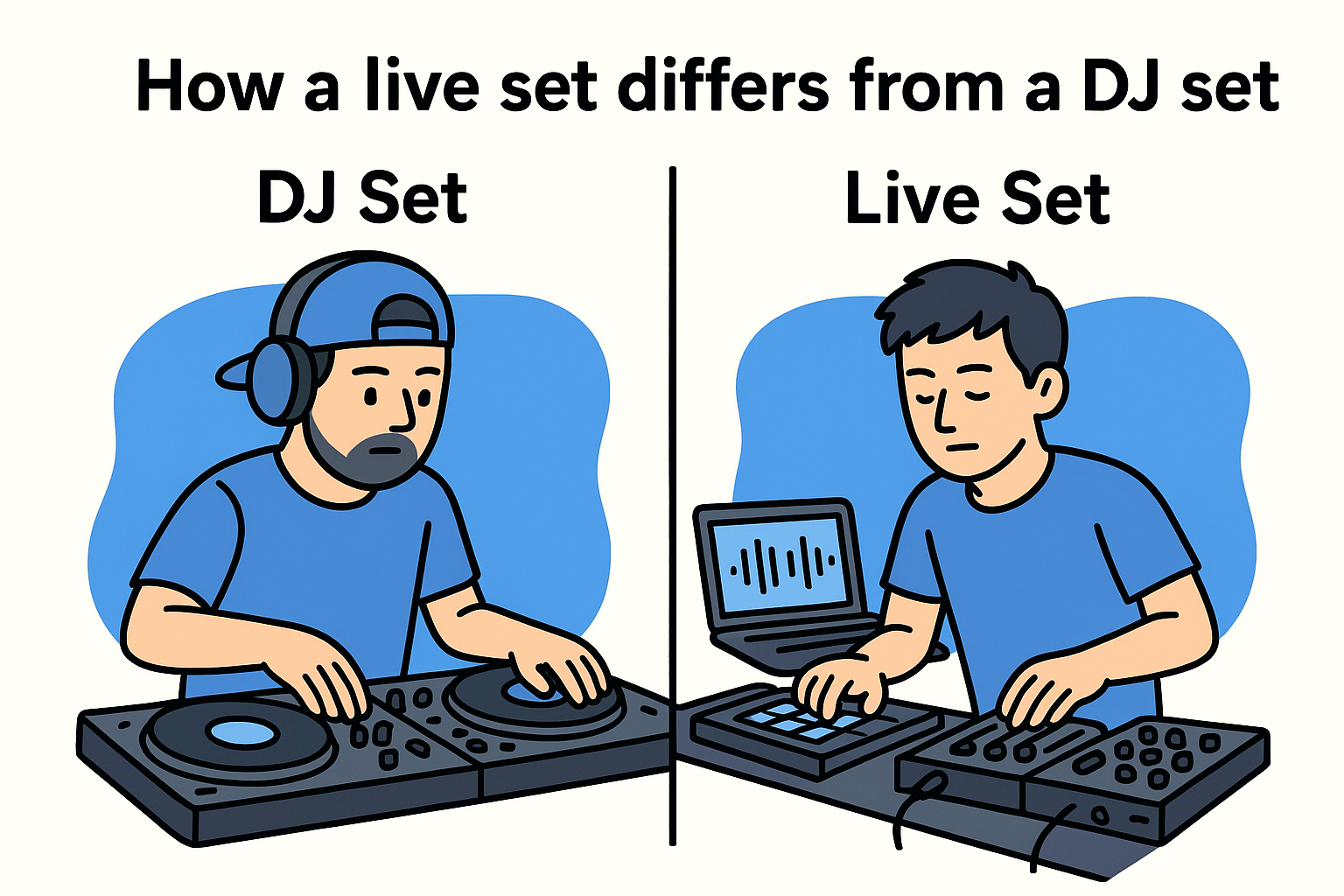
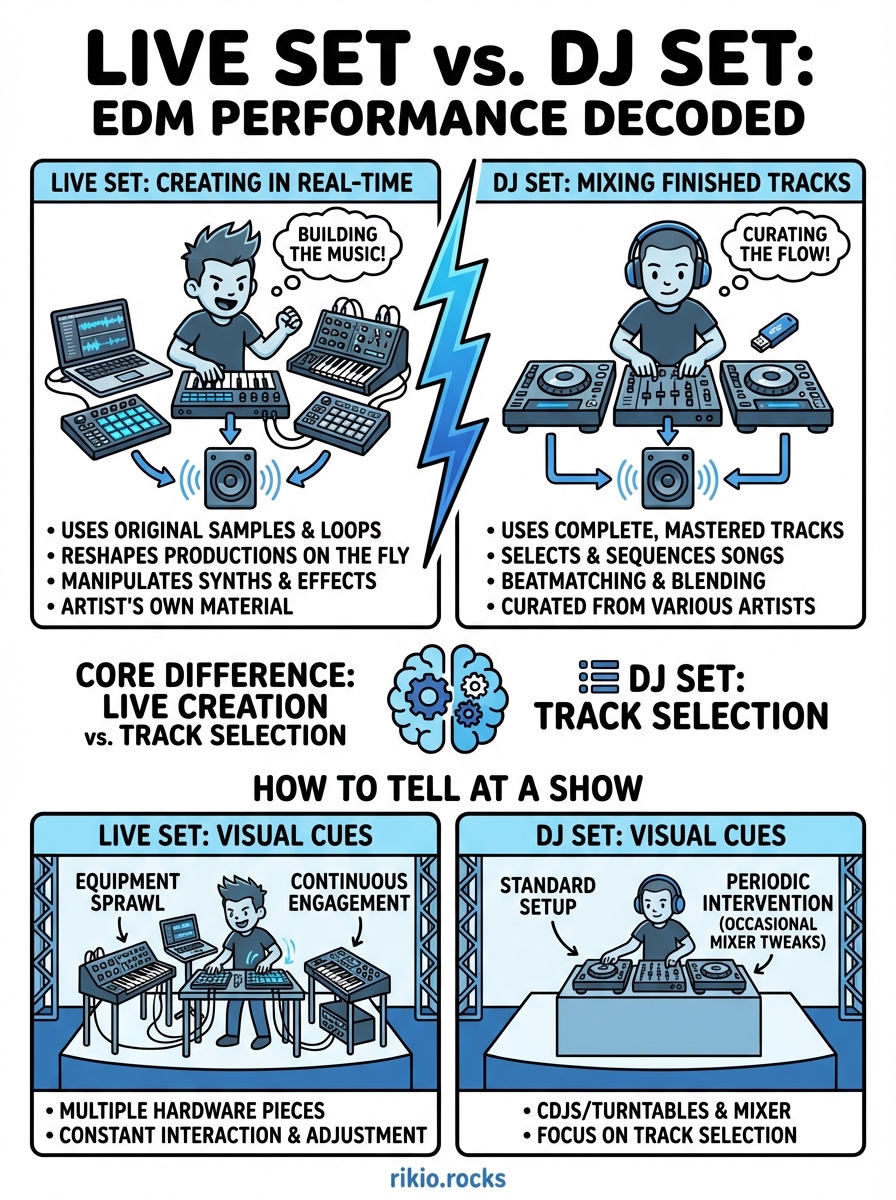
The fundamental split between these performance styles comes down to track selection versus live creation. DJs work with finished recordings from multiple artists, beatmatching and blending them into a continuous flow. When you ask what is a live set, you're looking at an artist who builds the music itself during the performance using their own sounds and compositions. DJs curate and sequence existing material while live performers construct sonic elements in the moment.
The role of pre-made tracks versus live creation
Your DJ set relies on complete, mastered tracks that already exist as polished products. The DJ's job involves selecting which songs to play, timing transitions, and adjusting EQ to blend one track into another. Live performers start with raw components like drum loops, synth patches, and vocal samples that they trigger and manipulate individually. This difference means DJs focus on programming the journey between tracks while live artists control every layer of sound happening at any given moment.
"A DJ reads the room by choosing the right track; a live performer reads the room by shaping the track itself."
Technical skill and preparation requirements
DJs develop beatmatching precision and an encyclopedic knowledge of music across genres, labels, and eras. Live performers need sound design expertise, synthesis knowledge, and the ability to troubleshoot technical problems while performing. Your DJ set preparation involves track selection and playlist organization. Live set preparation requires building entire project files, mapping MIDI controllers, and rehearsing performance workflows that might involve dozens of simultaneous processes running on a laptop.
Why live sets matter for artists and crowds
Understanding what is a live set helps you grasp why this performance format resonates so deeply with both performers and audiences. Artists gain creative freedom that extends far beyond what traditional DJing allows, while crowds experience unique performances that can never be perfectly replicated. This mutual benefit creates a special dynamic where both sides feed off the energy of unrepeatable moments.
Artist creative expression and career growth
Live sets allow producers to showcase their own music in an environment they control completely. You stop being limited by track selection and instead demonstrate technical production skills in front of thousands. This exposure builds your reputation as a serious artist rather than just someone who plays other people's music. Artists who perform live sets can command higher booking fees because promoters recognize the additional preparation and skill involved.
"Performing live transforms a bedroom producer into a stage performer with distinct artistic identity."
Audience experience and connection
Your crowd receives something they can't get from a recording or standard DJ set. Each performance varies based on room energy, technical choices, and spontaneous decisions the artist makes in real time. Fans watching a live set witness raw creativity unfolding before them rather than experiencing carefully curated playlists. This connection strengthens when audiences realize they're part of a one-time sonic experiment that won't happen the same way again.
Common live set formats and gear setups
Your typical live set can take several distinct forms depending on the artist's workflow and technical preferences. Understanding what is a live set becomes clearer when you recognize the equipment patterns performers use to execute their real-time music creation. Each setup style offers different advantages for spontaneity, reliability, and visual engagement with the crowd.
Laptop-centered controller configurations
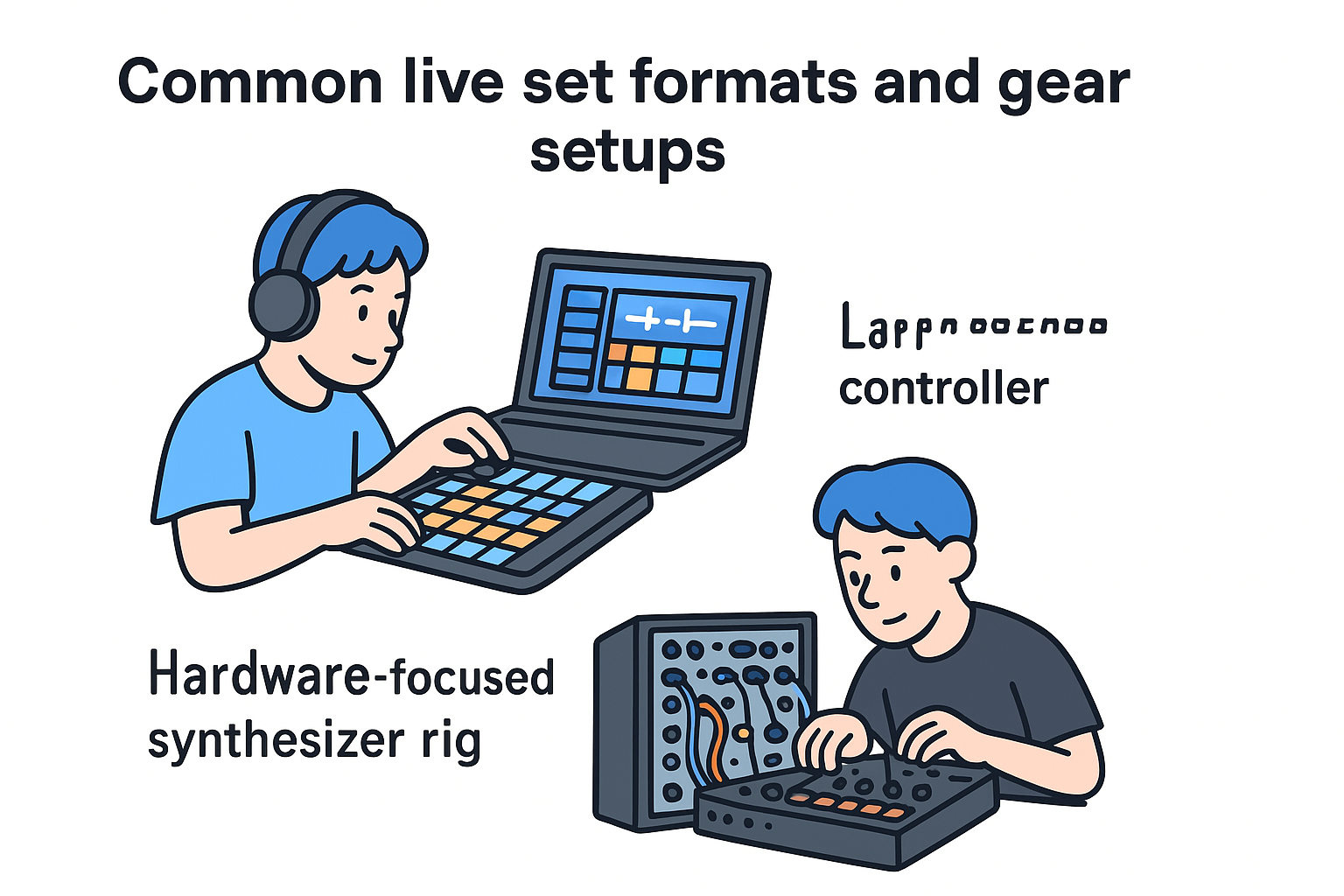
Most electronic artists build their live sets around software like Ableton Live paired with MIDI controllers that trigger clips and adjust parameters. You'll see performers using devices like the Ableton Push, Novation Launchpad, or custom controller grids that light up as they launch different musical sections. These setups offer maximum flexibility since artists can load unlimited sounds, effects, and arrangement possibilities into their computer. Controllers provide tactile feedback and visual indicators that help both the performer track what's playing and the audience understand that active manipulation is happening.
"Laptop-based live sets prioritize sonic possibility over analog warmth, giving artists access to their entire production toolkit on stage."
Hardware-focused synthesizer rigs
Some performers prefer physical instruments like the Elektron Octatrack, Roland TR-8S drum machine, or modular synthesizer cases that eliminate laptop dependency. These rigs demand more physical space but create undeniable visual impact when audiences watch artists twist knobs and patch cables in real time. Hardware setups force artists to commit to specific gear choices before the show, which can limit flexibility but often results in more focused, intentional performances. Your pure hardware live set requires extensive preparation since you can't simply load new sounds if something fails.
How to tell what you are seeing at a show
Your ability to distinguish between live sets and DJ sets improves when you know specific visual indicators that reveal what the performer is actually doing on stage. Understanding what is a live set becomes much easier when you observe equipment configurations and performer behavior rather than relying solely on how the music sounds. Festival lineups often label performances as "live" or "DJ set," but when those labels are missing, you can identify the format yourself by watching carefully.
Visual cues from stage equipment
Look for multiple pieces of hardware spread across the performance area instead of the standard CDJ and mixer setup. You'll spot synthesizers with visible control panels, drum machines with grid pads, or laptop stands surrounded by MIDI controllers with colored buttons. Live performers typically occupy more stage space because they need access to various instruments simultaneously. The presence of cables connecting different devices signals that the artist is routing audio between separate sound sources rather than just playing from two turntables or media players.
"Equipment sprawl across the stage usually indicates live performance rather than traditional DJing."
Behavioral indicators from the performer
Watch how the artist moves and interacts with their gear throughout the performance. Live performers constantly adjust knobs, trigger pads, and switch between different devices to build their sound. You'll notice them looking down frequently at specific pieces of equipment rather than gazing at the crowd or laptop screen for extended periods. DJ behavior involves more standing in one position, making occasional adjustments to EQ knobs, and spending time selecting the next track. Artists performing live sets display continuous physical engagement with multiple instruments rather than the periodic interventions DJs make between transitions.
Quick wrap-up
Your understanding of what is a live set now extends beyond simple definitions to the technical requirements and performance dynamics that separate this format from traditional DJing. You've learned how artists create music in real time using controllers, synthesizers, and laptops loaded with their original productions rather than simply mixing finished tracks. This knowledge helps you appreciate the preparation and skill performers invest when they take their studio work to the stage.
Recognizing live sets at festivals and clubs becomes straightforward once you notice equipment sprawl and continuous performer engagement with multiple devices. The energy and spontaneity you experience at these performances captures electronic music's creative essence in ways recorded tracks cannot replicate. When you need that same high-energy vibe for your next workout, check out our CARDIO HITS 2026 Playlist on Spotify for tracks that bring festival intensity straight to your gym session.
9