What Is a Record Label? Roles, Deals, and Why Artists
Sign
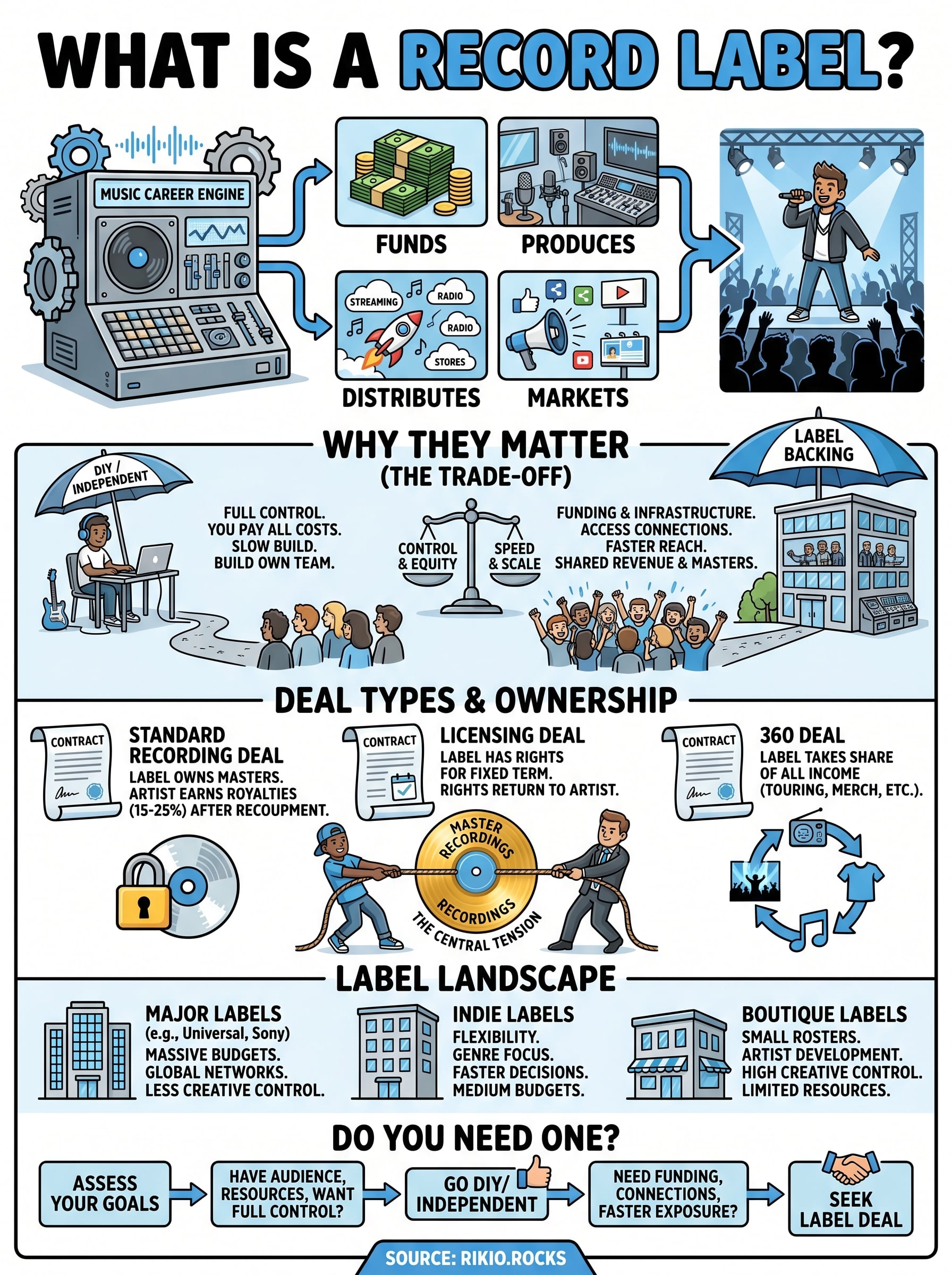
Every artist you read about on RIKIO ROCKS, from headliining DJs at major festivals to bedroom producers dropping their first remix, eventually faces the same question: should I sign with a label? But before that decision makes any sense, you need to understand what is a record label and what it actually does. A record label is a company that funds, produces, distributes, and markets music on behalf of artists, typically in exchange for a share of revenue and, in many cases, ownership of the master recordings.
That's the short answer. The full picture is more layered. Labels range from massive corporations like Universal Music Group and Sony Music down to independent imprints run by a single person with a SoundCloud page and a vision. Their deals vary wildly, some offer artists millions upfront, others offer nothing but distribution and a logo. What a label brings to the table (and what it takes in return) depends entirely on the type of deal, the size of the operation, and the artist's leverage at the negotiating table.
Whether you're an EDM fan trying to understand why your favorite producer just signed to a new imprint, or an aspiring artist weighing your own options, this article breaks it all down. We'll cover the core functions of a record label, the different types of deals artists sign, and why labels still matter, even in an era where anyone can self-release a track. By the end, you'll have a clear, practical understanding of how record labels operate and what they mean for the artists behind the music you love.
Why record labels still matter in 2026
A lot of people assume that streaming platforms and social media have made record labels obsolete. In theory, any producer can upload a track to Spotify today and reach listeners in 180 countries by tomorrow morning. But understanding what is a record label also means understanding why the infrastructure behind one is still difficult to replicate on your own, especially when you're trying to grow beyond a niche audience.
Labels don't just distribute music, they build careers, and that distinction matters more than ever in a market where millions of new tracks drop every week.
Money moves faster with label backing
Independent releases cost real money. Studio time, mixing, mastering, music videos, PR campaigns, and playlist pitching all carry price tags that add up quickly. A label absorbs those upfront costs in exchange for its cut of revenue. For most emerging EDM artists, that arrangement means the difference between releasing one polished track a year and putting out a consistent body of work that keeps fans engaged and algorithms happy.
Labels also bring relationships you simply don't have yet. A major label's A&R team can get a track placed on a curated editorial playlist or negotiate a sync deal for a TV show or commercial. Those opportunities typically take years to build independently, and most artists don't have that runway when they're trying to establish momentum in a fast-moving scene.
Distribution and reach are not the same thing
You can get your music onto every major streaming platform through a service like DistroKid in under 24 hours. But distribution and reach are two entirely different problems. Getting a track onto platforms is step one. Getting people to actually find and listen to it is the harder challenge.
Labels address this with dedicated marketing budgets, radio connections, press contacts, and brand partnerships that go well beyond what a solo artist can usually manage. In the EDM world specifically, a co-sign from an imprint like Spinnin' Records or Monstercat signals credibility to fans, promoters, and festival bookers at the same time. That kind of signal opens doors that a self-released track, no matter how well produced, often cannot open on its own.
What a record label actually does day to day
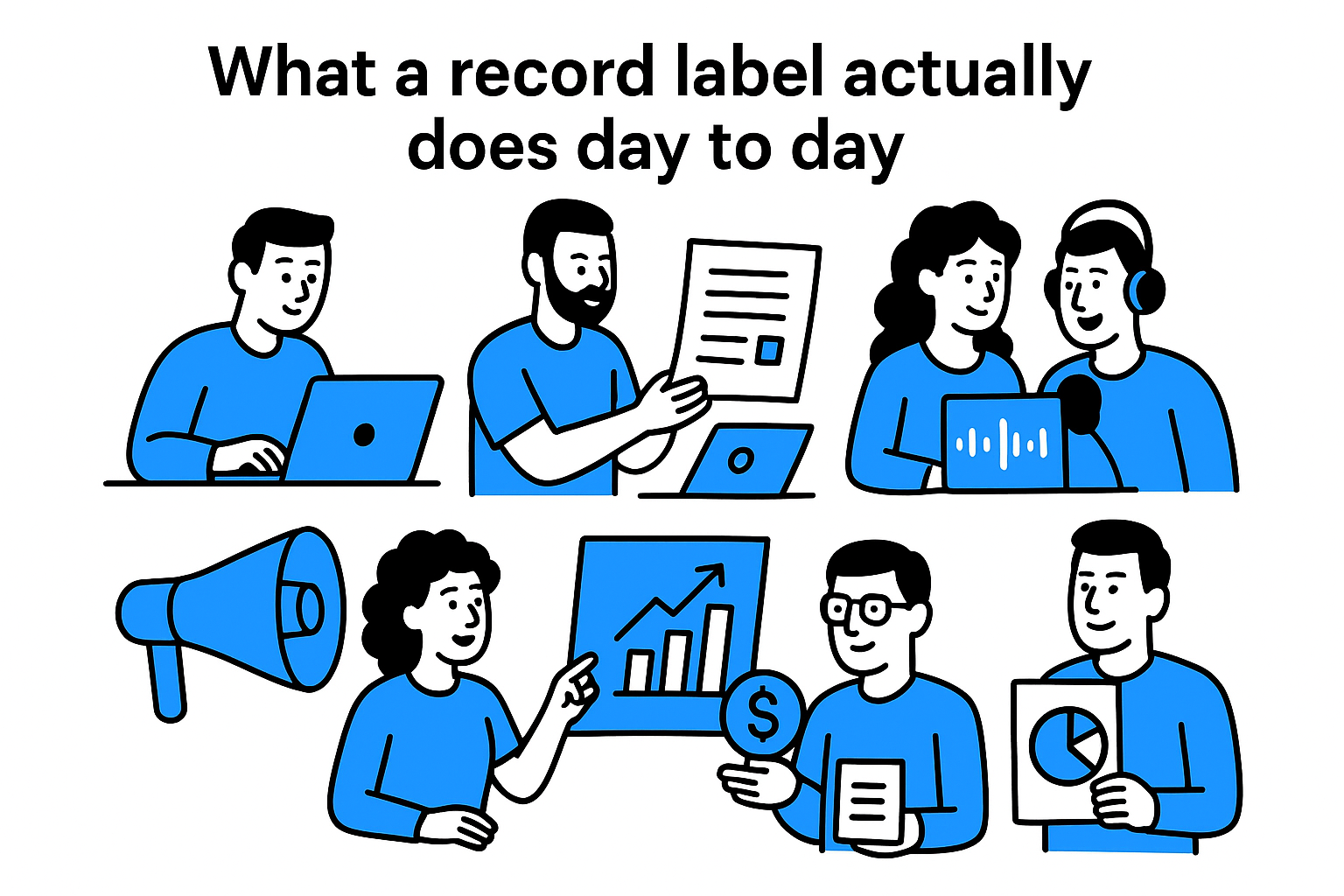
When people ask what is a record label, they usually picture glossy offices and signing parties. The reality is more operational than that. Behind every release, a label runs multiple workstreams simultaneously, coordinating teams that handle creative development, legal contracts, marketing campaigns, and financial reporting all at once. Most artists, including the ones you follow, only see one piece of that machine, but the whole system runs every single day.
Artist development and creative support
Labels assign A&R representatives (Artists and Repertoire) to work directly with artists on their sound, release strategy, and overall direction. In EDM, that often means helping a producer identify which tracks are ready, which need more work, and what gaps exist in their catalog before a full release cycle begins.
The A&R relationship is where most artists feel the label's influence most directly, because it shapes not just what gets released, but when and how.
Business, legal, and marketing operations
On the business side, labels manage licensing agreements, publishing royalties, and sync placements that most artists lack the expertise or connections to navigate on their own. That work includes negotiating with streaming platforms, collecting performance royalties through collection societies, and protecting masters from unauthorized use.
Marketing teams build out press campaigns, pitch tracks to playlist curators, and manage advertising budgets across social and streaming platforms. For an EDM release you care about, they coordinate with festival promoters and club bookers to make sure it lands at the right moment, not just uploaded and forgotten.
How record label deals work and who owns what
Understanding what is a record label also means understanding the contracts behind it. Most deals fall into a few structures, but terms vary based on how much the label invests and how much leverage you bring to the table. The agreement you sign determines your royalty rate and who controls your music, sometimes for decades.
The contract you sign on day one shapes every financial and creative decision that follows, so knowing what you're agreeing to is non-negotiable.
The standard recording contract
Traditional deals give the label full ownership of the master recordings in exchange for funding recording, marketing, and distribution. You earn a royalty, typically 15% to 25% of net revenue, after the label recoups its costs. That recoupment clause means you won't see checks until the label recovers every dollar it spent on your release.
Common deal structures:
- Standard deal: label owns masters, artist earns royalties after recoupment
- Licensing deal: label holds rights for a fixed term, then returns them to you
- 360 deal: label takes a share of all income streams, including touring
Who actually owns the master recordings
Master ownership is the central tension in most negotiations. When a label owns your masters, it controls licensing, sync placements, and commercial use of your music indefinitely.
Your negotiating leverage determines which structure is realistic for you. Emerging artists often accept full master ownership clauses, while established acts can push for licensing deals or artist-owned arrangements where rights never leave your hands.
Major vs indie vs boutique labels
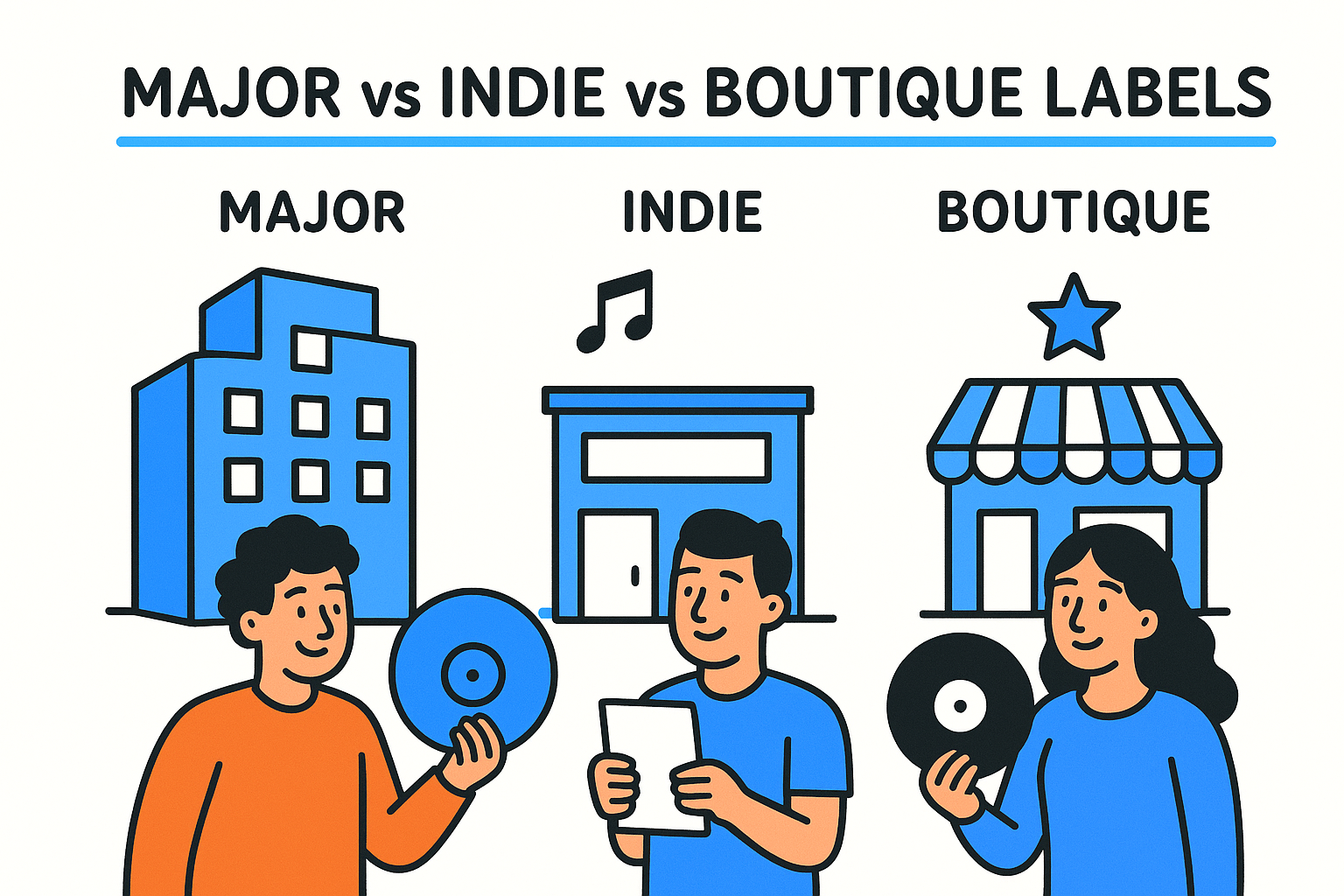
When people ask what is a record label, they rarely think about the spectrum of sizes and structures that exist within the industry. The label landscape breaks into three broad categories, each offering a different set of resources, trade-offs, and creative dynamics. Knowing the differences helps you understand why an artist's signing decision is never as simple as it looks from the outside.
Major labels
The three major labels, Universal Music Group, Sony Music Entertainment, and Warner Music Group, control the largest share of global music revenue. They offer the biggest budgets, the widest distribution networks, and the deepest roster of industry contacts. In EDM specifically, majors often operate through subsidiary imprints that carry a more genre-specific identity while still plugging into the parent company's full infrastructure.
Signing to a major buys you scale, but it usually costs you speed, creative control, and a larger share of your own revenue.
Indie and boutique labels
Independent labels operate outside the major system, which gives them more creative flexibility and faster decision-making. EDM-focused independents like Ninja Tune or Anjunabeats built loyal audiences by staying focused on specific sounds rather than chasing mainstream crossover appeal. Boutique labels take that even further. They typically sign only a handful of artists, operate with smaller budgets, and prioritize artist development over volume. For producers who want a real working relationship with their label and genuine control over their sound, a boutique imprint often delivers more than a major ever would.
Do you need a label, or can you go DIY
Asking what is a record label is really a stepping stone to the bigger question: do you actually need one? The honest answer depends on where you are in your career, what resources you have access to, and what you want your music to do for you. Neither path is inherently better. They just serve different goals at different stages.
The right choice is the one that matches your current resources and your long-term priorities, not the one that looks most impressive on paper.
When going independent makes sense
Independent releases work best when you already have an audience and a consistent output. If you can fund your own production, manage your own social presence, and pitch your own tracks to playlist curators, keeping full ownership of your masters is the smarter financial move long-term. Tools for self-distribution, royalty collection, and digital marketing are more accessible now than they have ever been, which genuinely lowers the barrier to building a career without label support.
Going DIY also gives you full creative control over every release decision, from timing to artwork to pricing.
When a label deal is worth it
Labels make the most sense when you need infrastructure you cannot build yourself, specifically the money, relationships, and marketing reach that take years to develop independently. If you want faster exposure to festival bookers, sync opportunities, or international press coverage, a label's existing network delivers those faster than going alone. The trade-off in revenue and ownership becomes more acceptable when the label is genuinely accelerating outcomes you could not reach otherwise.
Final thoughts
Understanding what is a record label gives you a clearer lens for every signing announcement, every independent release, and every career decision you read about in the EDM world. Labels are not good or bad by default. They are tools with specific trade-offs, and the right fit depends entirely on your stage, your goals, and what you're willing to give up in exchange for the support they provide.
Whether your favorite artist just signed to a major imprint or decided to self-release their next EP, the logic behind that choice comes down to resources, ownership, and timing. Now you know how to read those decisions for what they actually are. If you're keeping pace with the scene, keep your energy up with our CARDIO HITS 2026 playlist on Spotify, built for workouts that match the relentless tempo of electronic music.
65