Spotify Charts: What They Are, How They Work, And
Why
Every week, millions of streams decide which tracks rise and which ones fade. Spotify Charts rank the most-played songs, albums, and artists across the platform, broken down by global and regional data, giving listeners, creators, and industry watchers a real-time look at what's dominating right now.
For the EDM community, these charts carry serious weight. A single placement can launch a producer from bedroom sessions to festival main stages. At RIKIO ROCKS, we track those shifts daily, covering the artists, releases, and moments that shape electronic dance music. Understanding how Spotify's ranking system actually works gives you a sharper read on where the scene is headed and who's driving it.
This article breaks down the different types of Spotify Charts, explains the mechanics behind how songs earn their spots, and covers tools you can use to check your own listening stats. Whether you're a fan curious about what's trending or a producer trying to understand the algorithm, you'll walk away with a clear picture of how it all connects.
What Spotify Charts are and where to find them
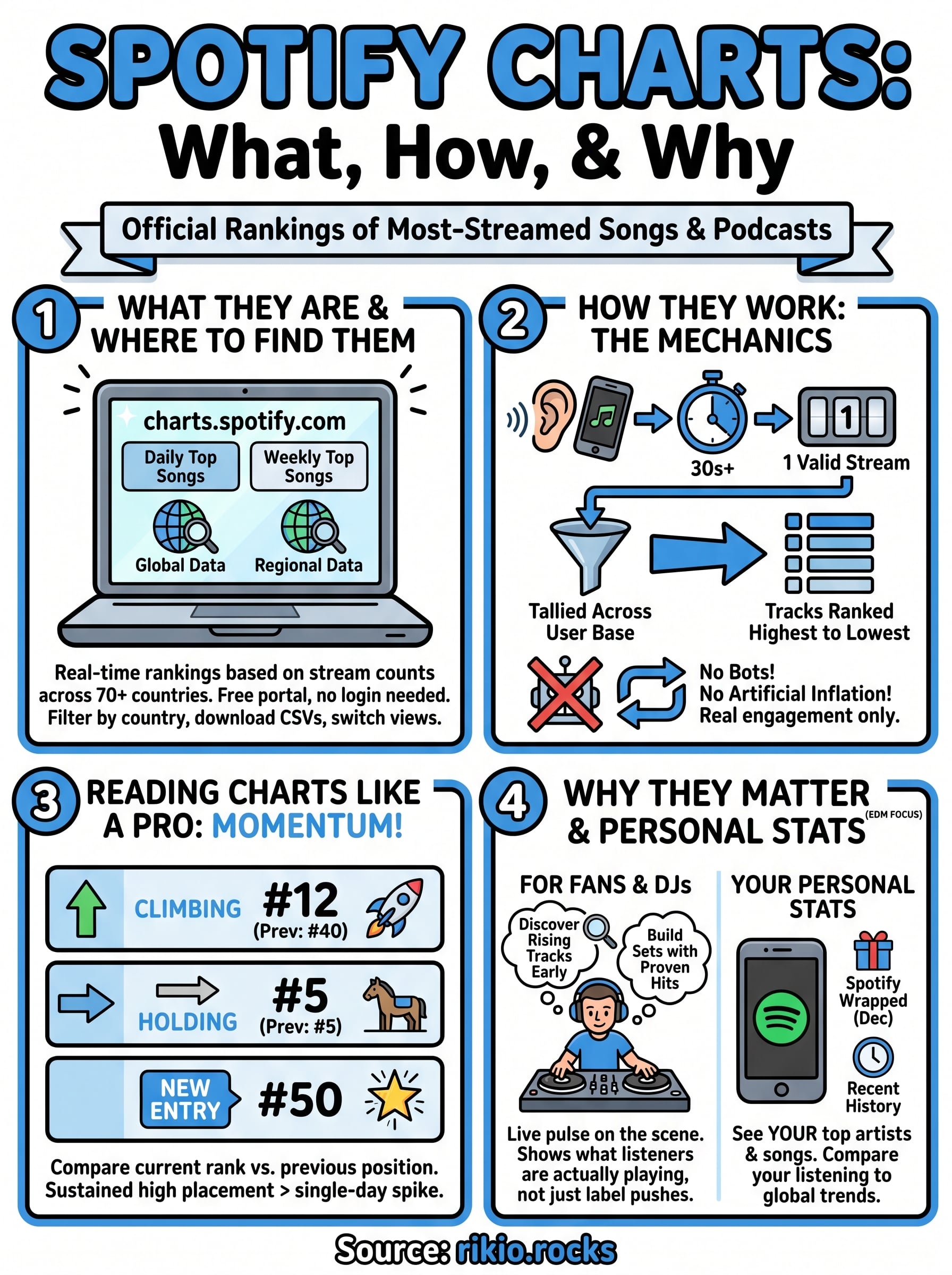
Spotify Charts is the official ranking system that organizes the most-streamed songs and podcasts on the platform into ordered lists. You get two main chart types: the Daily Top Songs and the Weekly Top Songs, each covering global reach or individual country-level data. These lists update automatically based on stream counts, giving you a fresh snapshot of listening habits across 70+ countries every single day.
A chart position on Spotify reflects real listener behavior at scale, not editorial picks or label influence.
The types of charts Spotify publishes
The platform currently publishes two core chart formats: Top Songs and Top Podcasts. The Top Songs chart ranks tracks by total streams within a set time window, while the Top Podcasts chart tracks episode performance. Within Top Songs, you can filter by daily or weekly aggregation and narrow the view to a specific country or pull the full global list.
For EDM fans and producers, the country-level breakdown is especially useful. A track can blow up in the Netherlands or Germany weeks before it reaches the U.S. Top 50, and the charts let you catch that movement early.
Where to access Spotify Charts
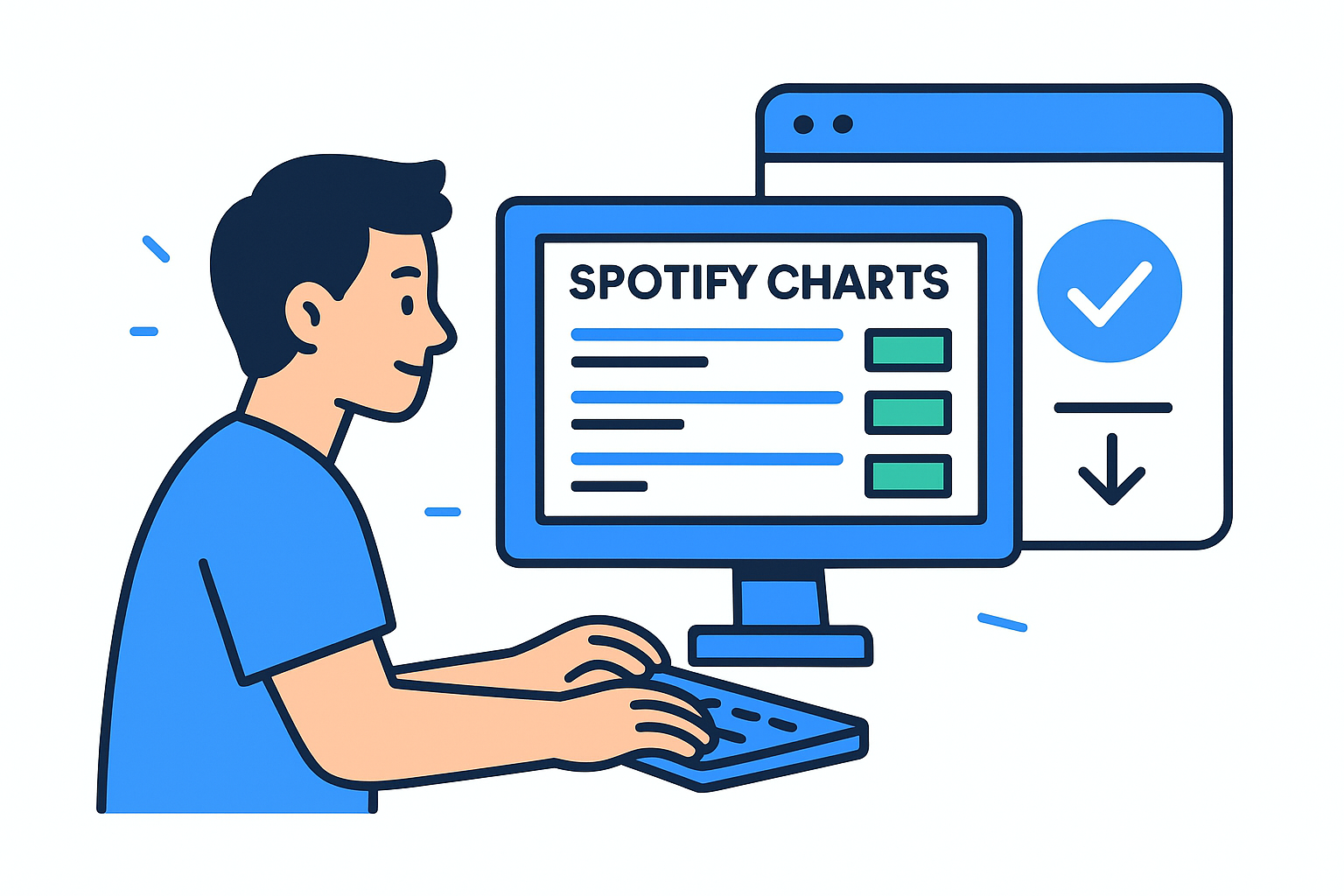
You find Spotify Charts at charts.spotify.com, which is Spotify's dedicated public charts portal, free to use with no login required. Each chart page shows the current ranking, previous position, and stream count for every track so you can read momentum at a glance. The portal also gives you a few practical options:
-
Download data as a CSV file for trend analysis
-
Filter by country to compare regional performance
-
Switch between daily and weekly views in one click
How Spotify Charts work behind the scenes
Spotify builds its rankings on a single core metric: stream counts. Every time a listener plays a track for at least 30 seconds, that play registers as one valid stream. The platform tallies those streams across its entire user base, then sorts tracks from highest to lowest within the chosen time window, giving spotify charts their real-time accuracy.
What counts and what doesn't
Not every play carries equal weight in the system. Spotify filters out artificial stream inflation, including plays generated by bots or looped streams from inactive accounts. This means the charts reflect genuine listener engagement rather than manipulated numbers.
A track needs real, sustained listener attention to hold a chart position, which is why organic fan bases drive more consistent results than short-term spikes.
Your location also shapes the country-level rankings. Spotify attributes each stream to the country where the listener's account is registered, which keeps regional charts geographically accurate. A producer based in Berlin whose track gets heavy rotation in Brazil will show up on the Brazil Top Songs chart, not the Germany chart, based purely on where those streams originate.
How to read Spotify Charts like a pro
Reading a chart position as a standalone number misses most of the story. What matters is movement: whether a track is climbing, holding, or dropping. When you check spotify charts, compare the current rank against the previous position shown on each row. A track sitting at #12 that was at #40 yesterday tells you far more than one that has been parked at #5 for two weeks.
Track momentum, not just position
A track entering the chart for the first time is labeled as new, while a song returning after a break gets a re-entry tag. Both signals point to surging listener activity. Sustained high placement over multiple days indicates genuine repeat listening, which is a stronger signal of long-term traction than a single-day spike.
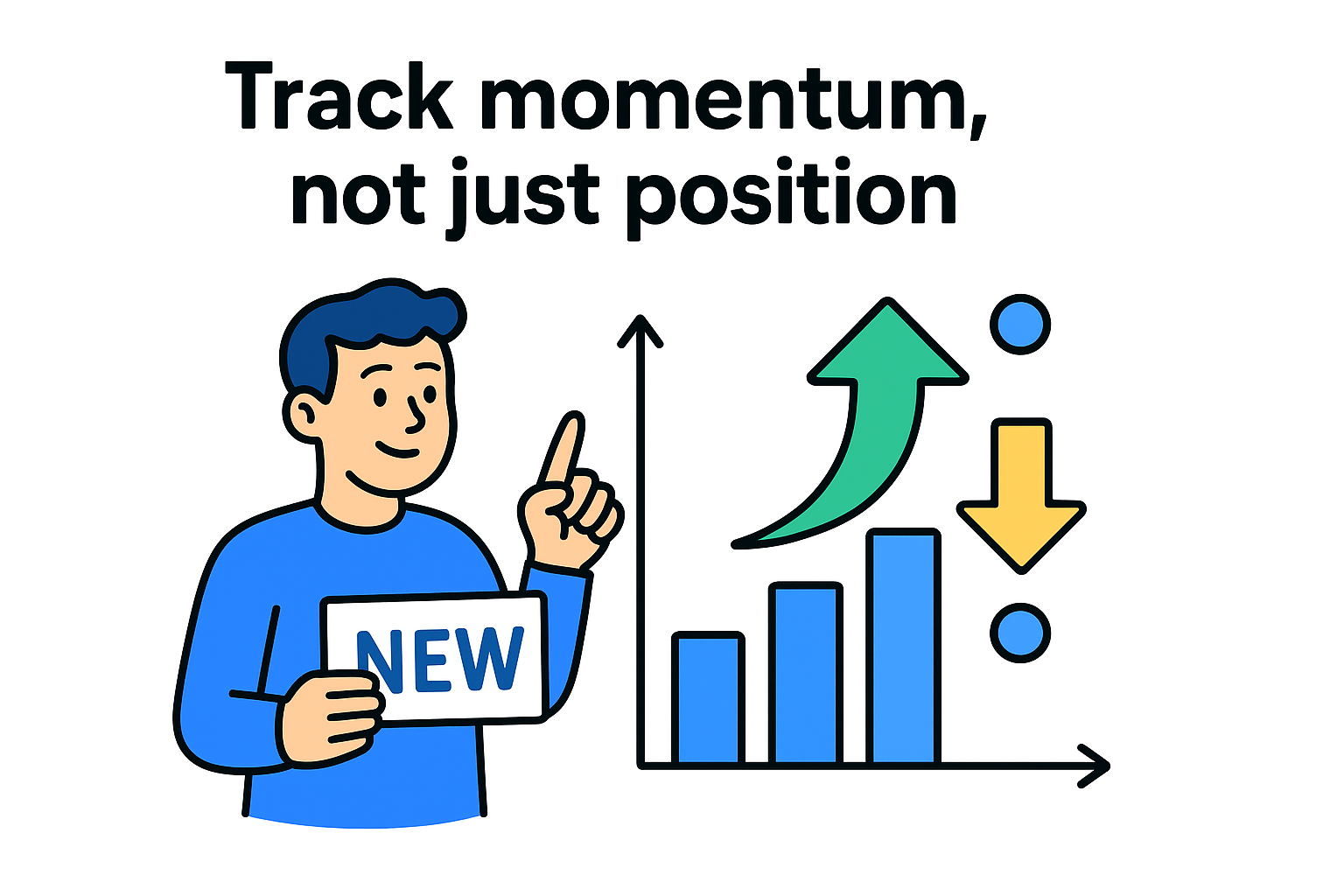
A one-day spike can come from a playlist feature or a social media moment, but a week-long climb usually reflects real audience growth.
Use the download feature for deeper analysis
Spotify's chart portal lets you export ranking data as a CSV file, which makes it easy to track week-over-week shifts. Load the file into a spreadsheet and plot position changes over time to spot patterns in how tracks build or lose momentum across different markets.
Why Spotify Charts matter for EDM fans and DJs
For EDM fans, spotify charts serve as a live pulse on the global dance music scene. When a new producer breaks into a country's Top 50, it signals that real listeners are responding, not just industry insiders. Charts give you a way to discover tracks that are gaining real traction before they flood every playlist and festival set list.
Spotify Charts cut through the noise by showing you what listeners are actually playing, not what labels are pushing.
How DJs use chart data to build sets
Working DJs rely on chart data to stay current with what crowds already know. A track climbing in multiple markets simultaneously is a strong indicator it will land well on a dance floor, especially if it builds momentum over several consecutive days rather than spiking once and dropping. Booking agents and festival programmers also watch these numbers when evaluating which artists draw genuine listener bases.
Building a set around tracks with proven chart momentum gives you a foundation that connects with audiences who have already heard the music through streaming. That shared familiarity drives energy in a room in ways that completely unproven tracks rarely can match.
How to check your personal Spotify stats
Spotify Charts show you what the world is listening to, but your own listening data tells a different story: yours. Spotify gives you built-in tools to surface that personal breakdown without needing any third-party software or extra accounts.
Your personal stats show which artists and tracks you actually return to, which often differs sharply from what tops the global charts.
Spotify Wrapped
Every December, Spotify releases Wrapped, a personalized summary of your listening year. It shows your top artists, top songs, total minutes streamed, and the genres that defined your year. You access it directly through the Spotify mobile app when it goes live, and the data covers your activity from January through late October of that year.
Checking recent listening in the app
For stats outside of Wrapped season, the Spotify mobile app gives you on-demand access to your listening history and recently played content. Open your profile page within the app to see a running list of artists and tracks you have played recently. Some artist pages also display their monthly listener count, which lets you cross-reference your personal favorites against broader platform performance and gives you context for where those tracks sit relative to current chart activity.
Quick recap
Spotify Charts give you a direct window into what listeners worldwide are actually playing, updated daily with real stream data. You now know where to find them at charts.spotify.com, how stream counts drive every ranking, and why movement tells you more than a single position number. For EDM fans and DJs, that data translates into real advantages: spotting rising tracks early, building informed sets, and tracking which markets respond to new music first.
Your personal stats through Wrapped and the Spotify mobile app round out the picture by showing how your own listening compares to global trends. Checking both sources together gives you the fullest view of what is resonating and where the scene is shifting.
If you want high-energy tracks that earn real plays, check out the CARDIO HITS 2026 playlist for a curated selection built to keep you moving and stay current with what listeners are reaching for right now.
9