How to Hire a Music Manager for Your EDM Career
You're playing bigger rooms, your streams are climbing, and label emails are piling up faster than you can answer them. That's usually the moment producers realize they need help, and it's exactly when most of them decide to hire a music manager. The problem is that nobody hands you a manual for this. You know you need someone in your corner, but you don't know where to look, what to pay, or how to tell a real professional from someone chasing a percentage of your Spotify royalties.
This guide walks you through the actual hiring process, step by step, built specifically for EDM artists rather than generic music industry advice. You'll learn how to spot red flags before you sign anything, what a fair management contract looks like, and which questions separate managers who can actually book festival slots from ones who just talk a good game.
We cover where to find candidates, from label connections to industry showcases, how to vet their track record with other DJs and producers, and what commission structure makes sense at your stage of the career. By the end, you'll have a clear checklist for finding a manager who fits your sound and your goals, not just the first person who slides into your DMs.
What a music manager does for your EDM career
A good manager becomes the operational backbone of your career, the person who keeps momentum going while you're in the studio or on a plane to your next show. Day-to-day artist management means someone is tracking your release calendar, chasing down late payments from promoters, and making sure your Beatport and streaming profiles actually look professional. Without that person, you end up doing this work at 2 a.m. after a gig, and it shows in missed deadlines and sloppy rollouts.
The daily grind managers handle
Before anything glamorous happens, a manager handles the unglamorous stuff that keeps your career functioning. They field the fifty emails a week from promoters, playlist curators, and blog writers so you don't have to. They coordinate with your booking agent (if you have one) on routing and logistics, and they keep a running calendar of every deadline tied to a release, from mastering to artwork to distributor uploads.
- Managing inbound requests from promoters, labels, and press
- Tracking release timelines across distributors and playlists
- Coordinating travel, riders, and technical needs for shows
- Keeping financial records organized for royalties and gig payouts
- Flagging opportunities you'd otherwise miss because you're heads-down producing
Booking and touring strategy
Rather than just reacting to whatever offer lands in your inbox, a strong manager builds a touring strategy around your trajectory. They know which festivals are worth playing for exposure even at a lower fee, and which club gigs actually build your fanbase versus just paying rent. They'll often work alongside a booking agent, with the manager setting overall career direction and the agent handling the mechanics of contracts and routing.

A manager's real job is making decisions you're too close to the music to make objectively.
Business and money matters
Managers also sit at the center of your business relationships, including labels, publishers, and sync licensing opportunities. They negotiate on your behalf, review contracts before you sign anything, and make sure you understand what you're giving up in exchange for an advance or a distribution deal. This is where contract literacy matters most, since a bad deal signed early in your career can follow you for years.
|
Task
|
Manager
|
Booking Agent
|
Label
|
|
Deal negotiation
|
Yes
|
No
|
Yes (own deals)
|
|
Show routing
|
Sometimes
|
Yes
|
No
|
|
Release strategy
|
Yes
|
No
|
Yes
|
|
Contract review
|
Yes
|
No
|
No
|
|
Day rate/fee
|
Commission (10-20%)
|
Commission (10-15%)
|
Advance/royalty split
|
What a manager won't do
Despite everything above, a manager isn't a magic fix for weak music or an inconsistent release schedule. They can't force a booking agent to submit you for a festival slot, and they can't manufacture a hit out of a track that isn't ready. Understanding this distinction early saves you from resentment later, when you expect your manager to do the agent's job or the label's job on top of their own.
Step 1. Assess whether you're ready for management
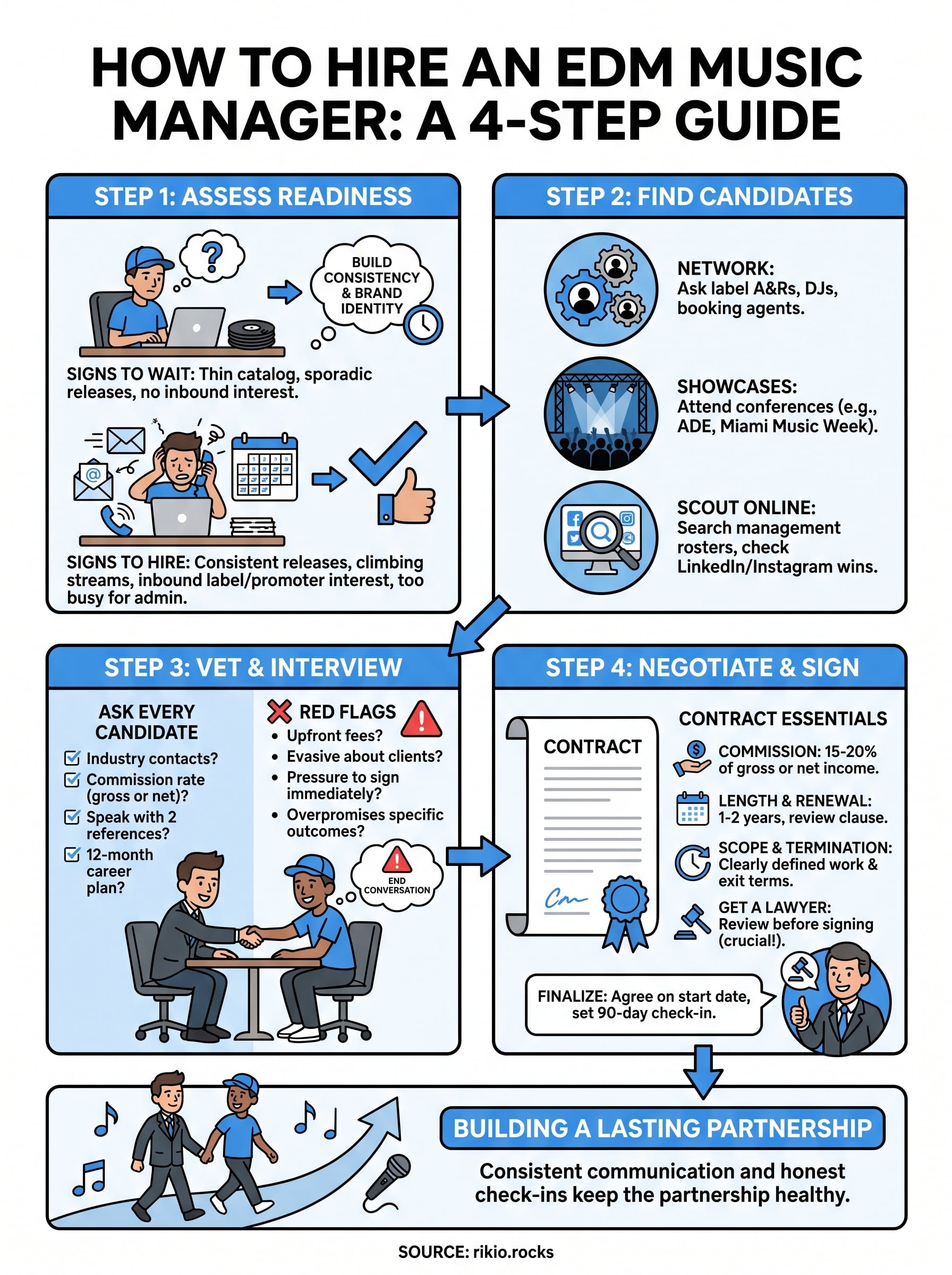
Before you start emailing managers, take an honest look at where your career actually stands. Signing with someone too early wastes their time and yours, and it often ends with a manager who loses interest once they realize there's nothing to sell. Most working managers won't take on an artist unless there's already proof of momentum, something they can build on rather than create from nothing.
Signs you're actually ready
Certain markers tell you it's time to hire a music manager rather than keep handling everything solo. If you're turning down opportunities because you can't keep up with the admin, that's a strong signal. If labels or promoters are reaching out unprompted, or your monthly Spotify/Beatport numbers are climbing without paid ads pushing them, you've got something a manager can actually work with.
- You're releasing music on a consistent schedule, not sporadically
- You have measurable streaming or sales growth over the last 6-12 months
- You're getting inbound booking or label interest without chasing it
- You're too busy producing and performing to handle emails and logistics
- You have a clear sound and brand, not just a pile of unreleased tracks
If nobody's asking for more of you yet, a manager has nothing to manage.
Signs you should wait
On the other hand, if your catalog is thin or your live show is still finding its footing, hold off. A manager working on commission needs revenue streams to grow, whether that's gig fees, sync placements, or royalties. Nobody can grow a 15% cut of nothing. Use this stretch of time to build your release consistency and refine your brand identity instead.
Quick self-check
Run through this before reaching out to anyone:
|
Question
|
If yes
|
If no
|
|
Are promoters or labels contacting you first?
|
Ready
|
Keep building
|
|
Have you released 3+ tracks in the past year?
|
Ready
|
Keep building
|
|
Are you missing deadlines because you're overwhelmed?
|
Ready
|
Keep building
|
|
Do you have a defined sound and audience?
|
Ready
|
Keep building
|
Passing most of these means you're at the stage where management value actually outweighs the commission you'll be paying. Failing most of them means your time is better spent on the music itself.
Step 2. Find music manager candidates
Once you know you're ready, the search itself takes real effort. You won't find a serious manager through a Google search results page. Most working managers get their artists through referrals, showcases, and direct scene involvement, so you need to go where those connections happen instead of waiting for someone to find you.
Start with your existing network
Your own contacts are the fastest path to a manager who already understands your sound. Labels you've released with often know managers looking for new artists, and other DJs on your level can point you toward people who actually deliver. Ask specifically who handles bookings, deal review, and release strategy for artists you respect, since a vague "do you know anyone" question rarely produces a useful answer.
- Ask label A&Rs who represents other artists on the roster
- Message DJs at your level about who manages their releases and shows
- Reach out to booking agents, since many work closely with managers and can make introductions
- Check liner notes or press releases for management credits on artists similar to you
Industry showcases and conferences
Conferences like ADE (Amsterdam Dance Event) and Miami Music Week put managers, agents, and label execs in the same rooms for days at a time. Showing up with a EPK ready and a few tracks people can hear on the spot puts you in front of exactly the people you're trying to reach. These events also let you watch how managers talk about their current artists, which tells you a lot about how they'd talk about you.

The best manager candidates are usually already working with artists you admire, not waiting in an inbox for a cold pitch.
Scouting online, carefully
Social platforms and management company websites can surface candidates too, but treat this as a supplement, not your main strategy. Search management rosters on label and agency sites, and look at who's actively posting about client wins on LinkedIn or Instagram. Skip anyone advertising "management services" directly to unsigned artists with no visible client list. That's usually a sign they're chasing commission rather than results, and it's a shortcut you'll regret once you sign a management agreement.
Step 3. Vet and interview potential managers
Once you've got a shortlist, treat every conversation like a job interview, because that's exactly what it is. You're hiring someone to make decisions about your money and your reputation, so the vetting process matters more than how charming they sound on a first call. Reference checks matter here as much as the pitch itself, and a manager who dodges giving you contacts for current or former artists should raise a flag immediately.
Questions to ask every candidate
Go into interviews with a specific list rather than a general chat about your goals. You want answers that reveal how they actually operate day to day, not just what they hope to accomplish.
- How many artists do you currently manage, and how much time can you give me?
- Who are your industry contacts at labels, festivals, and booking agencies?
- What's your commission rate, and does it apply to gross or net income?
- Can I speak with two current or former clients?
- What's your plan for my career in the next 12 months?
A manager who can't name specific goals for your next year probably doesn't have one.
Checking their track record
Don't take a manager's word on their results. Look up the artists they claim to represent and check whether those careers actually moved forward under their watch, whether that's more festival bookings, label placements, or growth in monthly listeners. Cross-reference client testimonials against public data like tour history and release schedules on Beatport or Spotify. If a manager claims credit for a festival slot, verify the timeline lines up with when they started working together.
Red flags that should end the conversation
Certain behaviors during vetting tell you everything you need to know before you get anywhere near a contract.
|
Red flag
|
Why it matters
|
|
Asks for upfront fees before any work
|
Legitimate managers earn through commission, not retainers
|
|
Vague or evasive about current clients
|
Suggests limited real experience
|
|
Pushes you to sign immediately
|
Pressure tactics rarely accompany good deals
|
|
No clear plan beyond "I'll get you gigs"
|
Lacks strategic thinking for your career
|
|
Overpromises specific outcomes
|
No one can guarantee festival slots or chart placement
|
Treat the interview stage as your last real chance to walk away cleanly. Once you sign, extracting yourself from a bad management contract costs money and time you'd rather spend making music.
Step 4. Negotiate terms and sign your agreement
Once you've found a manager you trust, the contract itself deserves as much scrutiny as the interview process. This is where vague enthusiasm turns into legal obligation, so slow down and read every clause before you sign anything. A fair management agreement protects both sides, spelling out exactly what the manager does, what they earn, and how either party exits if things stop working.
Commission and contract length
Standard commission for EDM managers runs 15-20% of gross income from gigs, releases, and sync deals, though some newer managers accept less to build a roster. Push for commission on net income where possible, since gross deals mean you're paying a manager's cut on expenses like travel and production costs too. Contract length matters just as much: avoid anything longer than two years without a review clause, and make sure there's a defined process for renewal rather than an automatic rollover.
Sign a contract you can walk away from, not one that traps you if the relationship sours.
What every contract should include
Before you put your name on anything, check that the agreement covers these basics:
- Commission rate and whether it's gross or net
- Scope of work, meaning exactly which income streams the manager covers
- Contract length and renewal terms
- Termination clause with a clear notice period
- Post-termination commission on deals negotiated before the split
- Exclusivity terms, so you know if you can work with other reps for specific tasks
Getting a lawyer involved
Don't sign a management contract without a music attorney reviewing it first, even if the manager is a friend or someone from your own scene. A one-time review typically costs a few hundred dollars and can catch clauses that cost you thousands later, particularly around post-termination commissions or overly broad definitions of what counts as your "music income." The U.S. Small Business Administration offers general guidance on reviewing business contracts before signing, which applies here even though your manager isn't technically an employer.
Finalizing the deal
Once your attorney signs off, agree on a start date and a first 90-day check-in to assess how things are going. Building in that early review gives both sides a low-stakes way to course-correct before deeper commitments, like tour planning or a label negotiation, are underway.
Building a lasting partnership
Hiring the right manager comes down to timing, diligence, and a contract that protects you as much as them. Get the sequence right: confirm you're actually ready, find candidates through real scene connections, vet them harder than feels comfortable, and get a lawyer on the paperwork before you sign anything. Skip a step and you'll likely end up managing your manager instead of your career.
Once the ink dries, the real work starts. Consistent communication and honest check-ins keep the partnership healthy long after that first 90-day review, and the best manager relationships evolve as your catalog and audience grow. Treat it like any working relationship: show up prepared, deliver on your end, and expect the same in return.
While you build that momentum in the studio, keep your energy up between sessions. Press play on our CARDIO HITS 2026 playlist on Spotify and keep the tempo going.
9