9 Best EDM Artists You Need to Know
Scroll through any festival lineup and you'll see the same problem: too many names, not enough time to figure out who's actually worth your attention. Sorting through edm artists across house, dubstep, trance, and everything in between takes hours you probably don't have, especially when half the "best of" lists online just recycle the same five headliners.
This list cuts through that noise. We're breaking down nine top edm artists who've earned their spot through chart performance, festival headline slots, and genuine influence on how electronic music sounds today, not just algorithm-driven popularity. Whether you want famous edm artists you already half-recognize or names that deserve a bigger spot in your rotation, you'll find both here.
Each entry covers what makes that artist stand out, their signature sound, and where to start listening if you're new to their catalog. By the end, you'll have a solid starting point for new playlists and a clearer picture of who's actually shaping the scene right now. If you're building a festival watchlist or just tired of hearing the same tracks on repeat, this rundown gives you real names worth checking out today.
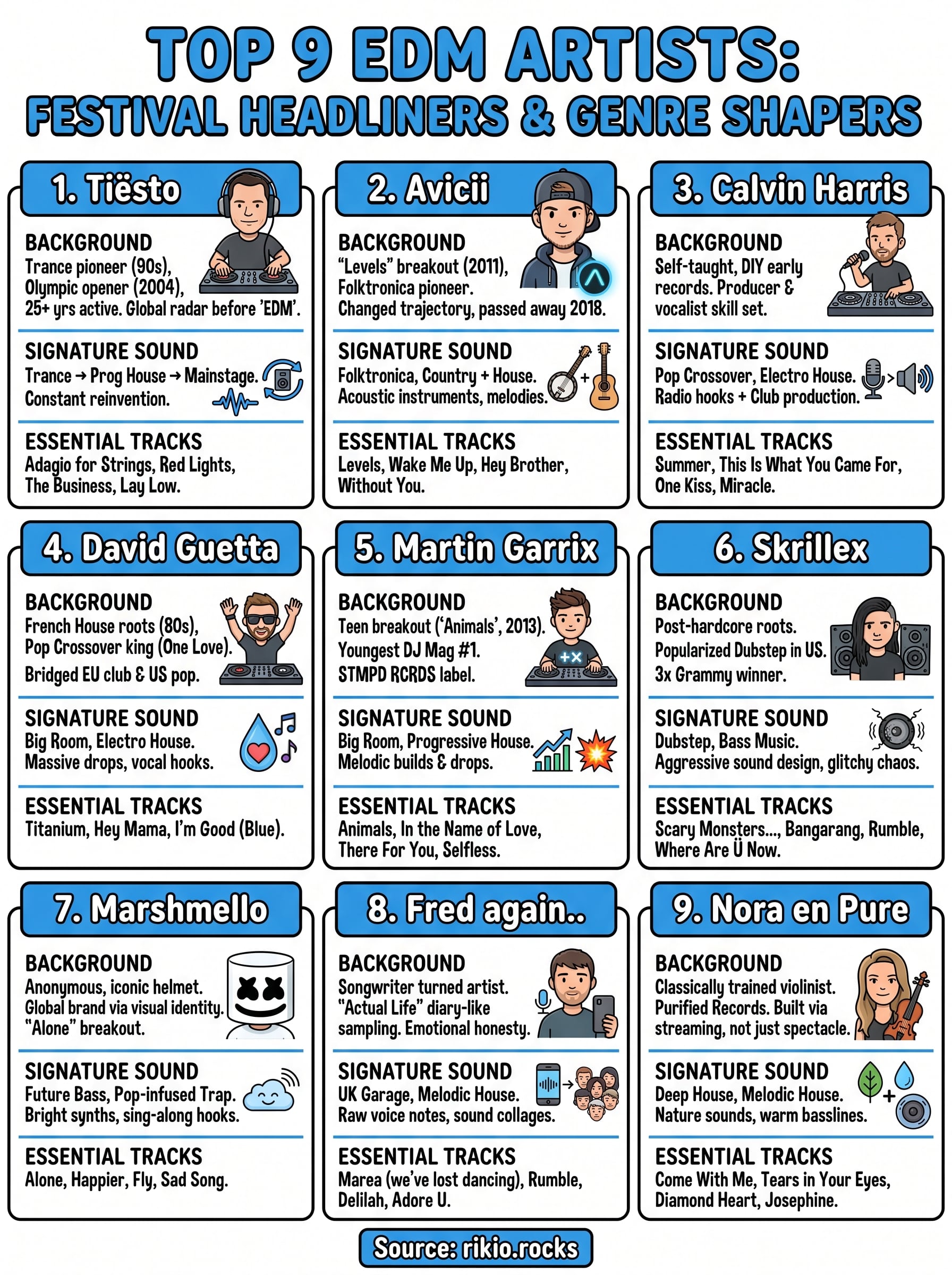
1. Tiësto Background
Dutch DJ Tijs Verwest, known worldwide as Tiësto, started spinning records in the early 1990s and by 2001 had already released In My Memory, an album that put trance on the global radar. He's the rare figure among edm artists who built his career before EDM was even a marketable term in the US, playing underground clubs in Europe while American audiences were still years away from discovering the genre. Rolling Stone once named him the greatest DJ of all time, a title that still gets debated but rarely disputed outright.
Signature sound
Tiësto's catalog reads like a history of dance music itself. He started in trance, shifted into progressive house during the 2010s festival boom, and now moves comfortably through big-room and mainstage electro. That willingness to reinvent himself track by track is exactly what keeps him relevant across three decades, something few producers manage without losing their core audience.
Tiësto didn't just survive multiple eras of dance music, he helped define each one.
Essential tracks
If you're building a starter playlist, these tracks show the range:
- "Adagio for Strings" (2004) - the trance anthem that made his name outside Europe
- "Red Lights" (2014) - proof he could dominate mainstream radio
- "The Business" (2020) - his pivot toward tech house and a genuine chart hit
- "Lay Low" (2023) - shows he still knows how to make festival crowds move
Why they matter in EDM
Few names carry the weight Tiësto does when people search for top 10 edm artists lists. He headlined the 2004 Athens Olympics opening ceremony, the first DJ to perform at an Olympic event, a moment that legitimized electronic music on a global stage long before streaming numbers or festival attendance made the case for him. Consider him the connective thread between old-school trance purists and today's mainstage crowd, an artist whose willingness to adapt has kept him on lineups for over 25 years. If you only add one legacy act to your rotation, make it him.
2. Avicii Background
Swedish producer Tim Bergling, known as Avicii, broke through in 2011 with "Levels," a track that reshaped what mainstream dance music could sound like. He signed with Ash Pournouri's management at just 18 and released True in 2013, an album that folded folk and country instrumentation into electronic production years before that crossover became common. Health struggles forced him off the touring circuit early, and he passed away in 2018 at 28, cutting short a career that had already changed the genre's trajectory.
Signature sound
Avicii's melodies borrowed from folktronica and country as much as house music, layering banjo and acoustic guitar samples over four-on-the-floor beats. That fusion sounds obvious now because so many producers copied it, but in 2013 it was genuinely strange for a club record to include a fiddle line.
Avicii proved dance music could borrow from anywhere and still fill a festival field.
Essential tracks
Start with these if you're new to his catalog:
- "Levels" (2011) - the track that introduced his sound to a global audience
- "Wake Me Up" (2013) - folk-house crossover that topped charts in over 20 countries
- "Hey Brother" (2013) - shows the emotional range behind the production
- "Without You" (2017) - one of his final major releases
Why they matter in EDM
Any honest list of best edm artists of all time has to include Avicii, because he widened what the genre could sound like and who it could reach. His influence shows up every time a producer reaches for an acoustic sample instead of another synth patch.
3. Calvin Harris Background
Scottish producer Adam Wiles, better known as Calvin Harris, taught himself production in his bedroom before landing a deal with Sony in 2007 off the back of self-recorded demos. He built early records like I Created Disco almost entirely alone, writing, producing, and often singing his own tracks, a rare skill set among famous edm artists who typically rely on outside vocalists from the start. That hands-on control shaped everything he released afterward.
Signature sound
Harris moved from electro house into full pop-crossover territory, stacking hooks and radio-ready choruses on top of club-grade production. He treats collaboration as a tool rather than a crutch, pairing his beats with pop and R&B vocalists to reach audiences who'd never click play on a straight house track.
Calvin Harris turned dance production into a pop songwriting career without losing the club.
Essential tracks
These tracks map his shift from underground producer to pop hitmaker:
- "Summer" (2014) - festival-ready melody that still gets played every summer season
- "This Is What You Came For" (2016) - with Rihanna, a genuine crossover smash
- "One Kiss" (2018) - with Dua Lipa, proof he can still dominate UK charts
- "Miracle" (2022) - with Ellie Goulding, showing his hook-writing hasn't slowed
Why they matter in EDM
Searches for top edm artists of all time almost always include Harris because he proved a producer could headline both festival mainstages and pop radio simultaneously. Few names have bridged that gap as cleanly, and his songwriting credits for other artists extend his influence well past his own discography.
4. David Guetta Background
French DJ Pierre David Guetta started spinning at Parisian clubs in the 1980s, decades before EDM broke into the American mainstream. He built his name through the 2000s on French house records, then pushed further into pop territory with 2009's One Love, an album packed with guest vocalists that turned him into one of the most recognizable famous edm artists on the planet. That crossover instinct, pairing club production with radio hooks, became his career blueprint.
Signature sound
Guetta works in big room house and electro house, built around massive drops and vocal hooks designed to work as easily on Top 40 radio as on a festival mainstage. He's also credited with helping popularize the DJ-as-producer model in the US, where the DJ booth became the headline act rather than a supporting role at a pop show.
David Guetta turned the DJ booth into the main stage for an entire generation of American festivalgoers.
Essential tracks
Start your Guetta playlist here:
- "When Love Takes Over" (2009) - with Kelly Rowland, an early sign pop and dance could merge seamlessly
- "Titanium" (2011) - with Sia, arguably his most enduring vocal collaboration
- "Hey Mama" (2015) - with Nicki Minaj, a festival and radio staple
- "I'm Good (Blue)" (2022) - proof he still knows how to land a viral hit
Why they matter in EDM
Ask anyone compiling most popular edm artists lists and Guetta's name comes up fast, largely because he helped build the bridge between European club culture and American pop radio. His fingerprints are on nearly every big-room hit that followed.
5. Martin Garrix Background
Dutch producer Martijn Garritsen, known as Martin Garrix, was just 17 when "Animals" hit number one across Europe in 2013, making him one of the youngest famous edm artists to top mainstream charts. He'd been producing since age 14, teaching himself through online tutorials before signing to Spinnin' Records, and within two years he'd already topped DJ Mag's Top 100 DJs poll, a spot he held for multiple years running.
Signature sound
Garrix works primarily in big room and progressive house, building tracks around melodic builds and massive drops designed for main-stage moments. He's also shown range beyond festival anthems, releasing more emotional, melodic work under his own label STMPD RCRDS, which lets him experiment without answering to a major label's commercial expectations.
Martin Garrix proved you didn't need decades of experience to define a festival sound, just the right track at the right moment.
Essential tracks
These tracks trace his path from teenage breakout to genre staple:
- "Animals" (2013) - the track that made him a household name overnight
- "In the Name of Love" (2016) - with Bebe Rexha, showing his pop crossover instincts
- "There For You" (2017) - with Troye Sivan, a softer melodic direction
- "Selfless" (2024) - proof he still knows how to build a festival drop
Why they matter in EDM
Anyone researching top edm artists under 30 has to start with Garrix, since he essentially redefined how young a producer could break into the mainstage tier. His label also gives newer producers a launchpad, extending his influence beyond his own catalog.
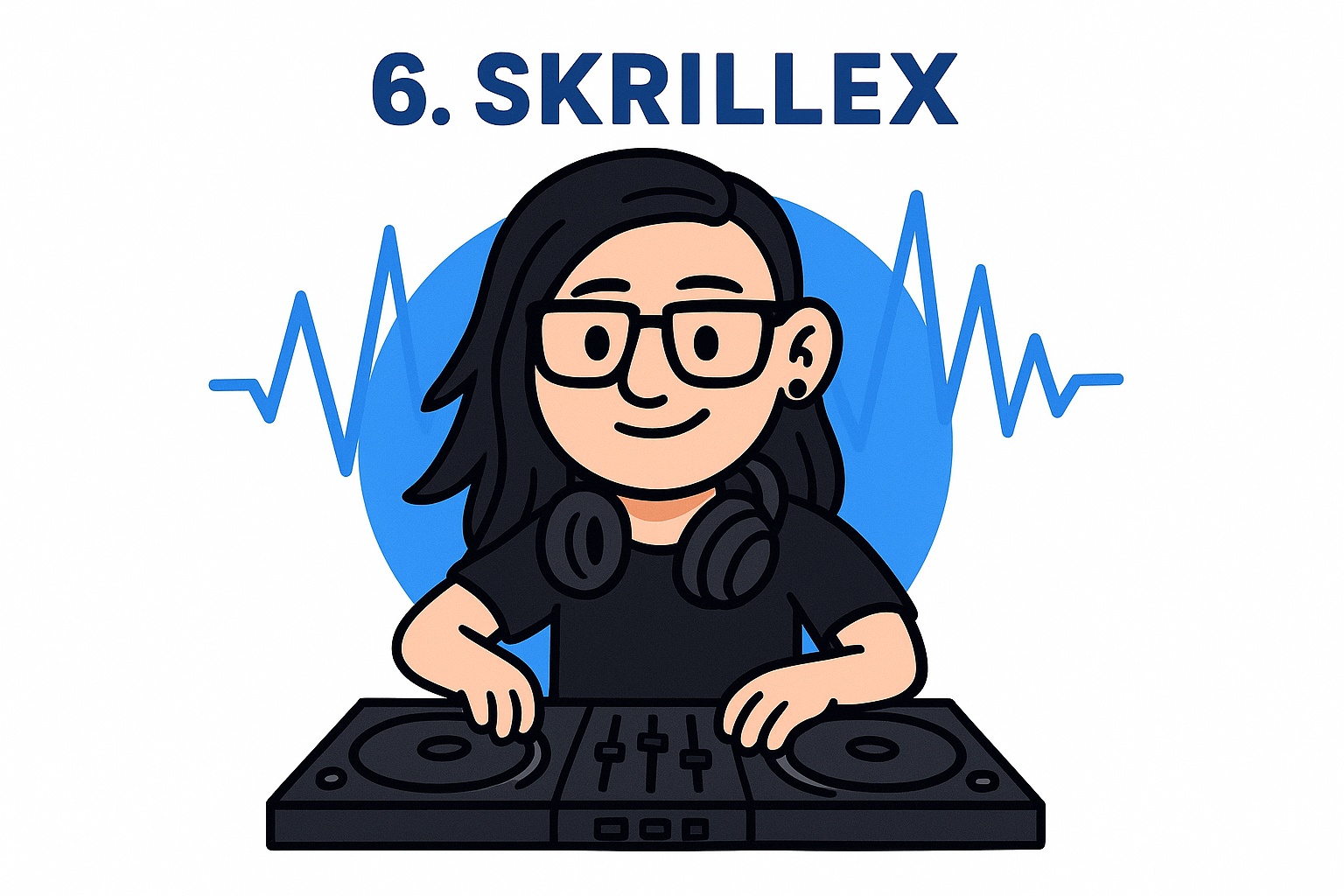
6. Skrillex Background
American producer Sonny Moore, better known as Skrillex, started out as the vocalist for a post-hardcore band before vocal cord damage pushed him toward production instead. That background shows in how aggressively he treats sound design, more like a rock musician chasing intensity than a traditional dance producer working within house or trance conventions. His 2010 EP Scary Monsters and Nice Sprites landed him three Grammy wins and introduced American audiences to a genre they'd barely heard of.
Signature sound
Skrillex built his name on dubstep, layering distorted bass wobbles and glitchy sound design into tracks that felt more like controlled chaos than typical club music. He's since branched into trap, future bass, and even pop production, but that willingness to break rhythm and melody apart before rebuilding them stays consistent across everything he releases.
Skrillex didn't just popularize dubstep in America, he made aggressive sound design a legitimate creative choice.
Essential tracks
Start here if you want the full arc of his sound:
- "Scary Monsters and Nice Sprites" (2010) - the track that introduced US audiences to dubstep
- "Bangarang" (2012) - a genre-defining single with his frequent collaborators
- "Where Are Ü Now" (2015) - with Jack Ü and Justin Bieber, a genuine pop crossover
- "Rumble" (2023) - with Fred again.. and Flowdan, proof he still shapes club sound today
Why they matter in EDM
Counting best edm artists without Skrillex misses half the genre's story, since he essentially introduced American ears to dubstep and made bass-heavy production commercially viable. His fingerprints show up in trap, future bass, and countless festival sets that lean on aggressive drops.
7. Marshmello Background
American producer Christopher Comstock built Marshmello into one of the most recognizable famous edm artists on the planet without ever revealing his face, performing behind a white marshmallow helmet since his 2015 debut. That anonymity turned into a marketing masterstroke, letting the music and the visual identity carry the brand instead of a traditional celebrity persona. He broke through with "Alone" in 2016, a track that crossed from SoundCloud into mainstream radio almost overnight.
Signature sound
Marshmello works mostly in future bass and trap-infused pop, favoring bright synth melodies and sing-along hooks over the darker bass drops that defined his early releases. He's since stretched into pop, hip-hop, and even video game soundtracks, treating genre boundaries as suggestions rather than rules.
Marshmello built a global brand on a helmet and a melody, proving personality can matter less than the hook.
Essential tracks
These tracks show his range from club anthem to pop crossover:
- "Alone" (2016) - the breakout single that put him on festival mainstages
- "Happier" (2018) - with Bastille, a genuine radio and streaming smash
- "Fly" (2019) - featuring Leah Culver, showing his softer melodic side
- "Sad Song" (2023) - proof he still knows how to land a hook
Why they matter in EDM
Any list of most popular edm artists built around streaming numbers has to include Marshmello, since his catalog racks up billions of plays across platforms. His success also proved that visual mystery could replace celebrity in a genre built on DJ personalities.
8. Fred again.. Background
British producer Fred Gibson, who records as Fred again.., spent years as a behind-the-scenes songwriter and producer for artists like Stormzy and Ed Sheeran before stepping into the spotlight himself around 2021. His Actual Life album series, built from voice memos, field recordings, and snippets of real conversations, turned everyday moments into dance tracks and set him apart from more traditional famous edm artists who build sets around pre-written hooks. That diary-like approach to sampling became his defining trait almost overnight.
Signature sound
Fred again.. works in UK garage and melodic house, chopping vocal samples into fragmented, emotional loops that feel more like sound collages than conventional club tracks. He treats a phone recording of a friend crying or laughing with the same care most producers reserve for a synth patch, which gives his music a rawness rare among top edm artists.
Fred again.. turned real life into raw material, and dance music hasn't sounded the same since.
Essential tracks
Start with these if his catalog is new to you:
- "Delilah (pull me out of this)" (2022) - the breakout single built from an Instagram Live clip
- "Marea (we've lost dancing)" (2021) - a tribute to nightlife lost during lockdown
- "Rumble" (2023) - with Skrillex and Flowdan, a bass-heavy crossover moment
- "Adore U" (2022) - with Obongjayar, showing his softer melodic side
Why they matter in EDM
Gibson's rise shows how quickly good edm artists can redefine a genre's sound using nothing but a laptop and a voice memo app. He's reshaped what emotional honesty can sound like on a festival mainstage.
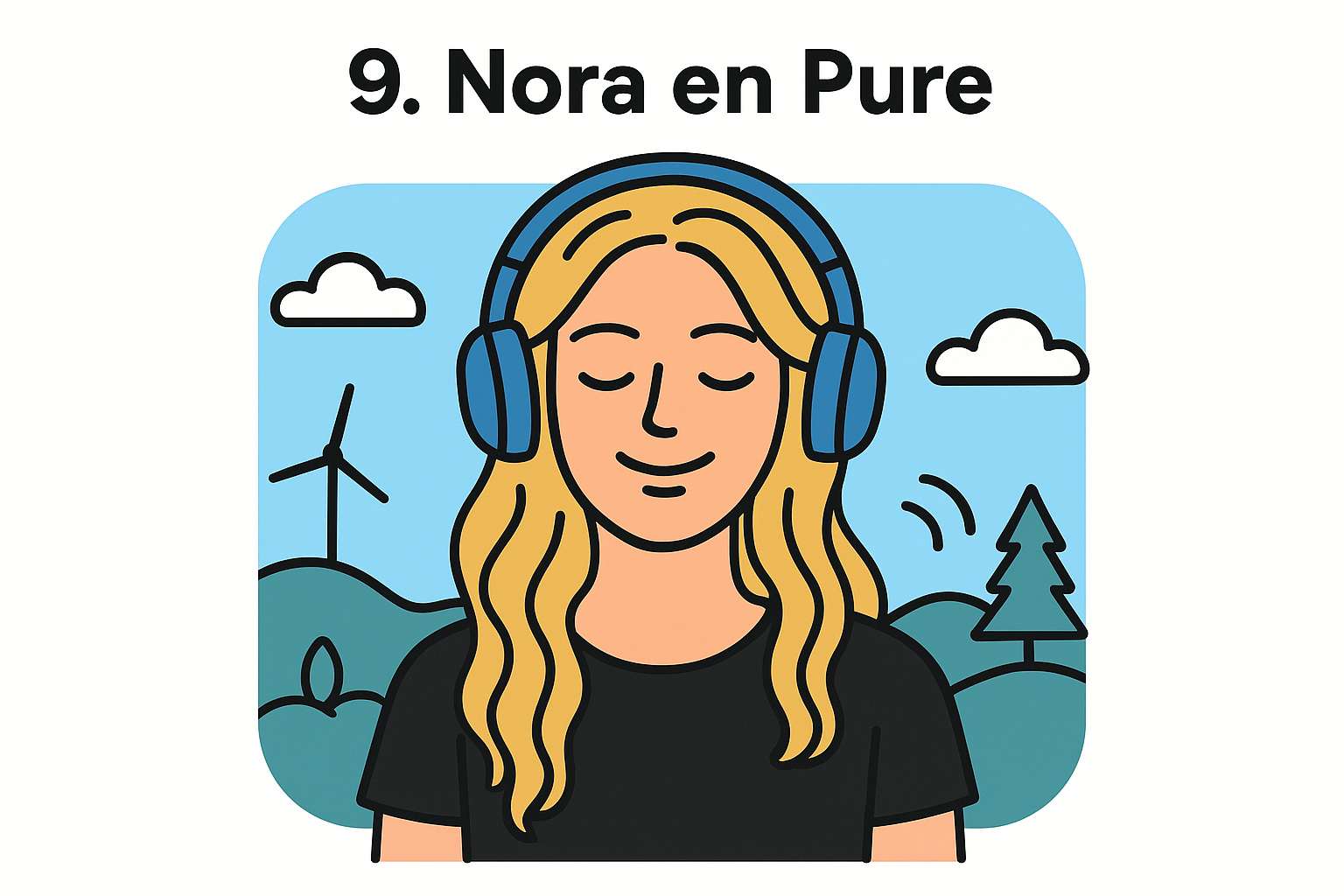
9. Nora en Pure Background
Swiss producer and violinist Daniela Niederer, known as Nora En Pure, started out playing classical violin before shifting toward electronic production in her twenties. She built her name through Enormous Tunes and later her own label, Purified Records, releasing tracks steadily rather than chasing a single viral breakout. Unlike many famous edm artists who lean on festival spectacle, she's built her following almost entirely through the strength of her sound design and a loyal streaming audience.
Signature sound
Nora En Pure works in deep house and melodic house, layering field recordings of nature, birdsong, rustling water, distant wind, under warm basslines and soft vocal chops. That organic texture gives her tracks a calm, outdoor quality that stands apart from the aggressive drops common among mainstage producers.
Nora En Pure proved deep house could headline playlists without ever needing a festival-sized drop.
Essential tracks
These tracks capture her nature-driven approach to deep house:
- "Come With Me" (2014) - the melodic breakout that built her early streaming base
- "Tears in Your Eyes" (2015) - a signature blend of field recordings and vocal chops
- "Diamond Heart" (2019) - shows her progression into fuller melodic arrangements
- "Josephine" (2022) - proof her sound has only gotten more polished over time
Why they matter in EDM
Any list of good edm artists working outside the mainstream spotlight needs her name, since she's shown deep house can build a massive audience on Spotify without chasing radio hooks or festival hype.
Finding your next favorite EDM artist
Nine names can't cover everything happening in electronic music right now, but they give you a real map. From Tiësto's three decades of reinvention to Fred again..'s voice-memo experiments, these best edm artists show how wide the genre has stretched without losing what makes it work on a dance floor. Pick two or three you haven't spent real time with and dig into their full catalogs, not just the singles that show up on playlists.
Quality tracks deserve a place beyond your headphones at home. If you want a practical way to put these artists to work, drop their high-energy cuts into your workout rotation and feel the difference tempo makes. Stream our CARDIO HITS 2026 playlist on Spotify and let these producers push your next session further than yesterday's.
4