9 Best Focal Studio Monitors Compared (Specs +
Pricing)
Focal has built a reputation among audio professionals by engineering studio monitors that deliver accurate, transparent sound reproduction, exactly what you need when mixing and mastering electronic dance music. Whether you're layering synths, sculpting bass, or fine-tuning a kick drum at 3 AM, the monitors sitting on your desk determine what you actually hear. Choose wrong, and your mix falls apart on every other system.
At RIKIO ROCKS, we cover the EDM scene from every angle, the festivals, the artists, and the tools producers rely on to create the music that moves dancefloors. Focal studio monitors show up in professional and home studios across the industry for good reason: they're built to reveal detail, not flatter your ears.
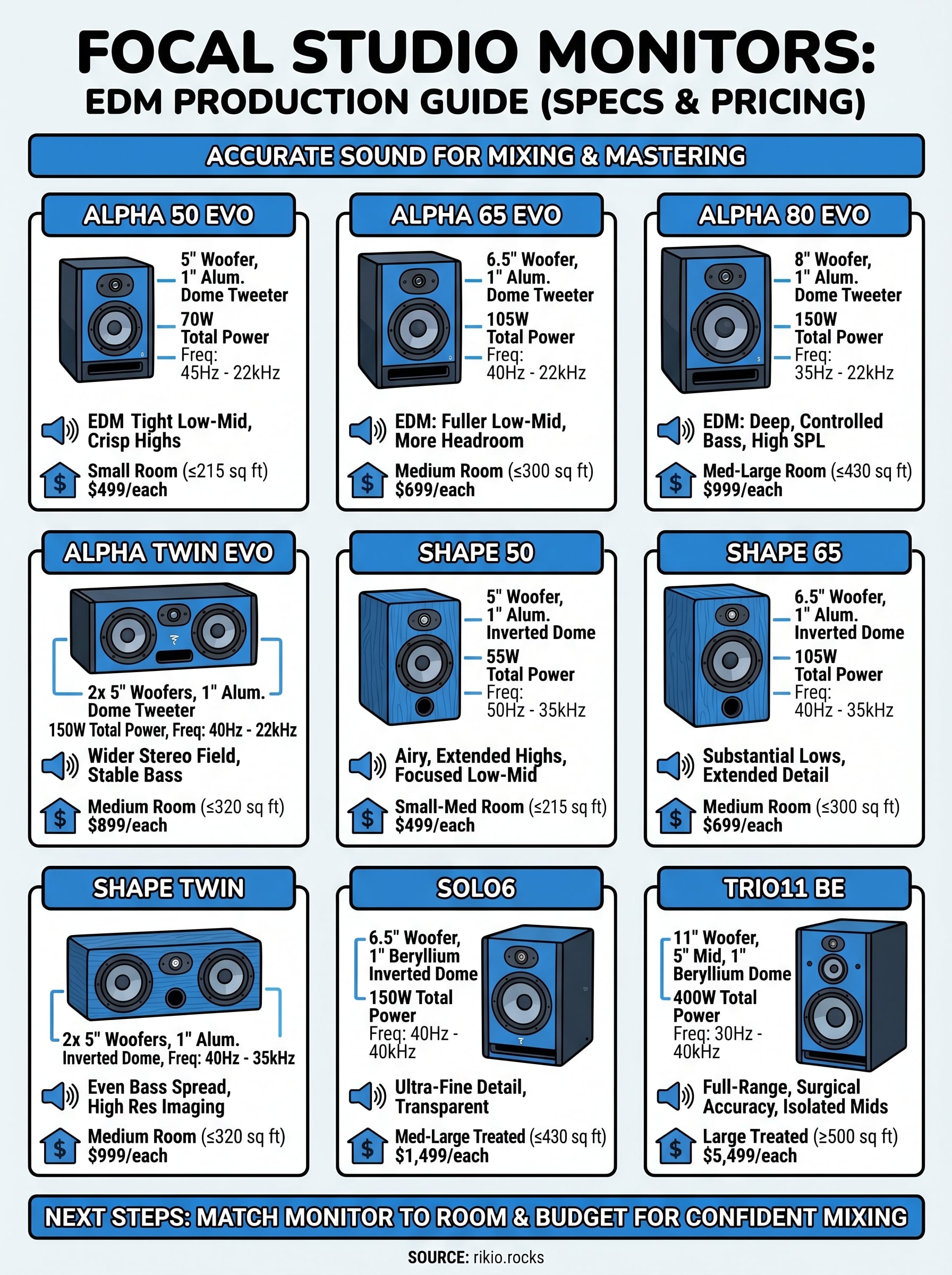
But Focal's lineup is wide. From the compact Alpha series to the high-end ST6 and Trio11, prices range from a few hundred dollars to well over ten thousand. Specs vary significantly across models, and picking the right pair depends on your room, your budget, and how serious you are about your monitoring chain. This guide breaks down nine Focal studio monitor models side by side, with full specs, pricing, and the key differences that actually matter, so you can make a confident decision.
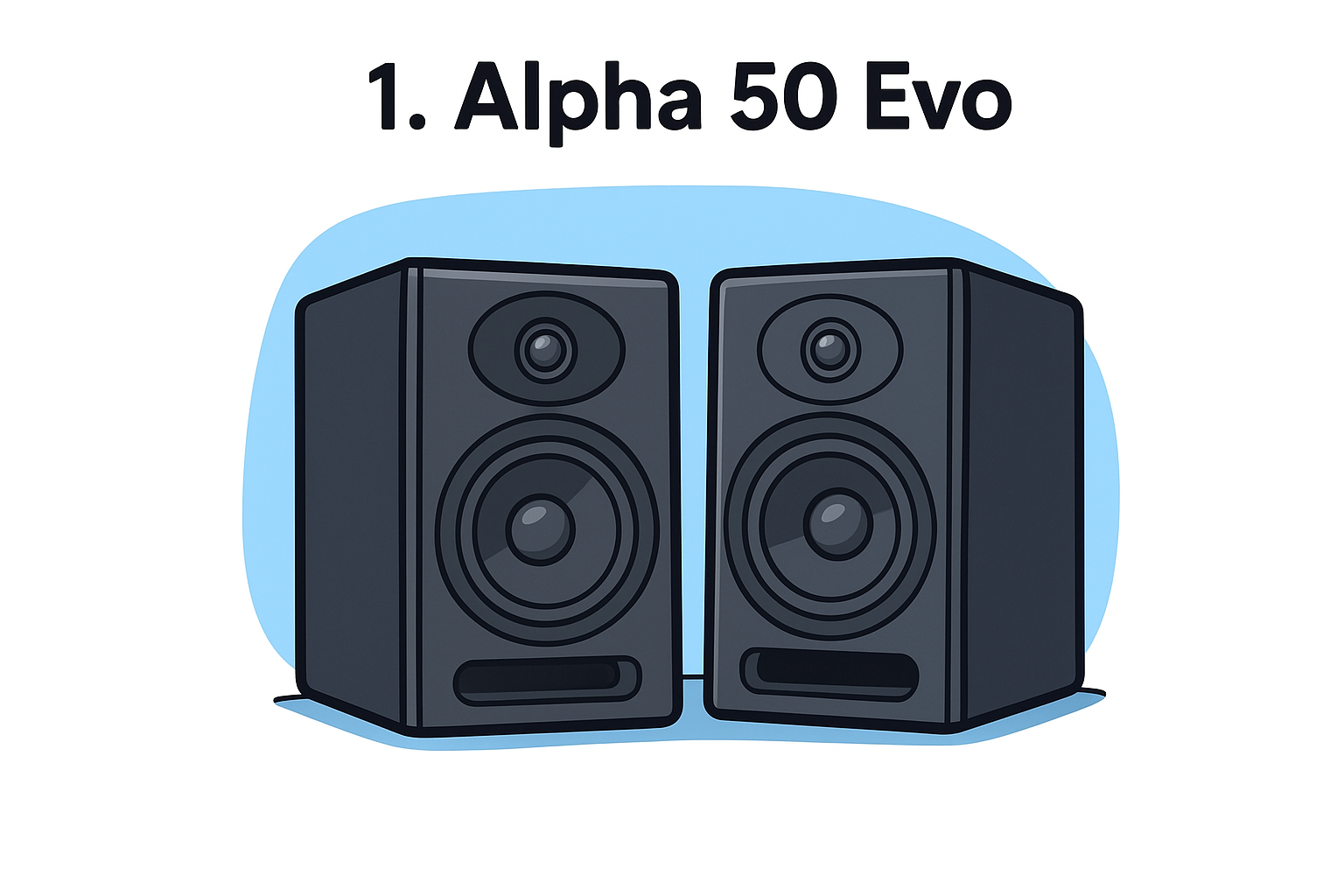
1. Alpha 50 Evo
The Alpha 50 Evo sits at the entry point of Focal's professional monitor range, but that position doesn't mean compromised performance. This compact two-way active monitor gives producers working in smaller home studios access to reference-grade listening without demanding a large footprint or a four-figure budget. Among focal studio monitors, it's often the first serious upgrade producers make when moving beyond consumer-grade speakers.
Key specs at a glance
The Alpha 50 Evo uses a 5-inch woofer paired with a 1-inch aluminum dome tweeter, with a total amplifier output of 70W split between 55W for the woofer and 15W for the tweeter. Frequency response runs from 45Hz to 22kHz, covering the core of the EDM frequency range without requiring a subwoofer in most small-room situations. It also includes built-in EQ shelving filters for low, mid, and high adjustments so you can compensate for acoustic problems in your room.
|
Spec
|
Detail
|
|
Woofer
|
5-inch
|
|
Tweeter
|
1-inch aluminum dome
|
|
Total Power
|
70W
|
|
Frequency Response
|
45Hz to 22kHz
|
|
Inputs
|
XLR balanced, RCA unbalanced
|
What it sounds like for EDM production and mixing
The Alpha 50 Evo delivers a tight, controlled low-mid response that keeps kick drums and bass lines defined rather than muddy. Its aluminum tweeter produces crisp, extended high-frequency detail, which becomes critical when placing hi-hats, airy synth tails, or layered percussive elements inside a dense mix. If your productions push heavily into sub-bass territory below 45Hz, you'll benefit from adding a dedicated subwoofer to the chain.
Producers who rely on deep sub-bass movement in their tracks should treat the Alpha 50 Evo's 45Hz low end as a practical floor, not a guarantee of full sub representation.
Best room size and placement notes
These monitors perform best in small to medium rooms up to approximately 215 square feet. Set them at ear level in a nearfield position, roughly 3 to 5 feet from your head, forming an equilateral triangle with your listening position. Engage the built-in low-shelf filter if you hear low-end accumulation from nearby walls or desk reflections.
Typical US price and where to buy
The Alpha 50 Evo typically sells for around $499 per monitor in the US, putting a stereo pair at approximately $998. You can purchase them through major music retailers or directly on Amazon.
2. Alpha 65 Evo
The Alpha 65 Evo steps up from the Alpha 50 with a larger woofer and more amplifier headroom, making it a natural fit for producers who need more volume and low-end extension without moving into premium pricing territory. If your studio room runs medium-sized and you push your mixes loud during sessions, this monitor gives you the extra control you need.
Key specs at a glance
The Alpha 65 Evo pairs a 6.5-inch woofer with a 1-inch aluminum dome tweeter, driven by 105W of total amplification. Frequency response extends from 40Hz to 22kHz, pushing the usable low-end floor down compared to the Alpha 50 Evo and reducing your dependence on a subwoofer for bass-heavy EDM work.
|
Spec
|
Detail
|
|
Woofer
|
6.5-inch
|
|
Tweeter
|
1-inch aluminum dome
|
|
Total Power
|
105W
|
|
Frequency Response
|
40Hz to 22kHz
|
|
Inputs
|
XLR balanced, RCA unbalanced
|
What it sounds like for EDM production and mixing
The larger woofer gives the Alpha 65 Evo a fuller, more authoritative low-mid presentation, which helps when balancing bass layers and kick transients in dense arrangements. Your high-frequency detail remains accurate and extended, consistent with what other focal studio monitors in this series deliver through the aluminum tweeter.
The 40Hz low-end extension makes this monitor genuinely useful for sub-bass monitoring without an outboard subwoofer in most medium room scenarios.
Best room size and placement notes
The Alpha 65 Evo suits medium rooms up to roughly 300 square feet. Position them in a nearfield triangle about 4 to 6 feet from your listening position, with the tweeters sitting at ear level.
Typical US price and where to buy
Expect to pay around $699 per monitor in the US, landing a stereo pair near $1,398. You'll find them at major music retailers and on Amazon.
3. Alpha 80 Evo
The Alpha 80 Evo targets producers who need serious low-end extension and high SPL output in larger studio environments. This monitor closes the gap between Focal's entry-level Alpha range and its professional-tier offerings, giving you genuine mixing power without crossing into premium pricing.
Key specs at a glance
The Alpha 80 Evo drives an 8-inch woofer paired with a 1-inch aluminum dome tweeter, backed by 150W of total amplification. Its frequency response reaches down to 35Hz, making it one of the more capable focal studio monitors for tracking and mixing bass-heavy material without a dedicated subwoofer.
|
Spec
|
Detail
|
|
Woofer
|
8-inch
|
|
Tweeter
|
1-inch aluminum dome
|
|
Total Power
|
150W
|
|
Frequency Response
|
35Hz to 22kHz
|
|
Inputs
|
XLR balanced, RCA unbalanced
|
What it sounds like for EDM production and mixing
The 8-inch woofer delivers deep, controlled bass reproduction that lets you hear sub-bass movement with real clarity. Your kick transients land with more physical weight, and layered bass elements stay separated rather than collapsing into each other, which saves significant time during the mixing stage.
At 35Hz, this monitor gives you genuine sub-bass visibility that smaller woofers simply cannot match in the same price range.
Best room size and placement notes
Position the Alpha 80 Evo in medium to large rooms up to 430 square feet. Set your listening triangle between 5 and 8 feet from the monitors, and apply the onboard EQ shelving filters to account for any room boundary buildup.
Typical US price and where to buy
The Alpha 80 Evo runs approximately $999 per monitor in the US, putting a stereo pair near $1,998. Purchase through major music retailers or Amazon.
4. Alpha Twin Evo
The Alpha Twin Evo takes a different design approach than the rest of the Alpha Evo lineup by pairing two 5-inch woofers with a single 1-inch aluminum dome tweeter in a three-point configuration. This setup widens the sweet spot and improves stereo imaging across a broader listening area, which becomes a genuine advantage when multiple people share a studio session or when your mixing position shifts during long production runs.
Key specs at a glance
The Alpha Twin Evo runs on 150W of total amplification spread across its dual-woofer and tweeter configuration. Frequency response extends from 40Hz to 22kHz, matching the Alpha 65 Evo in low-end reach while gaining the acoustic benefits of the twin-woofer layout. Onboard EQ shelving filters give you room correction flexibility.
|
Spec
|
Detail
|
|
Woofers
|
Two 5-inch
|
|
Tweeter
|
1-inch aluminum dome
|
|
Total Power
|
150W
|
|
Frequency Response
|
40Hz to 22kHz
|
|
Inputs
|
XLR balanced, RCA unbalanced
|
What it sounds like for EDM production and mixing
The dual woofers produce a wider, more even stereo field compared to single-woofer focal studio monitors at this price point. Your bass elements stay defined and centered, while transient detail on percussion and synth attacks comes through with consistent clarity across a broader listening area.
The twin-woofer configuration makes this monitor particularly valuable in collaborative studio setups where multiple listeners need accurate monitoring simultaneously.
Best room size and placement notes
The Alpha Twin Evo fits well in medium rooms up to 320 square feet. Keep your listening position 4 to 6 feet from the monitors with tweeters at ear level.
Typical US price and where to buy
The Alpha Twin Evo typically costs around $899 per monitor in the US, placing a stereo pair near $1,798. Major music retailers and Amazon carry them regularly.
5. Shape 50
The Shape 50 marks a clear shift in design philosophy compared to the Alpha Evo line. Focal built this monitor for producers who want professional acoustic performance alongside a cleaner, more refined aesthetic that integrates naturally into a home studio or desktop setup without sacrificing reference-grade monitoring capability.
Key specs at a glance
The Shape 50 pairs a 5-inch woofer with a 1-inch aluminum inverted dome tweeter, driven by 55W of total amplification. That inverted dome design pushes high-frequency extension up to 35kHz, well beyond what standard dome tweeters typically deliver. A front-facing bass port gives you more flexibility in speaker placement relative to walls.
|
Spec
|
Detail
|
|
Woofer
|
5-inch
|
|
Tweeter
|
1-inch aluminum inverted dome
|
|
Total Power
|
55W
|
|
Frequency Response
|
50Hz to 35kHz
|
|
Inputs
|
XLR balanced, RCA unbalanced
|
What it sounds like for EDM production and mixing
The inverted dome tweeter produces exceptionally airy, extended high-frequency reproduction, which gives you sharper resolution when placing atmospheric synth layers, reverb tails, and detailed percussion in a mix. Low-mid balance remains controlled and focused, though the 50Hz low-end floor means sub-heavy material will benefit from pairing these monitors with a dedicated subwoofer.
The extended 35kHz high-frequency ceiling makes the Shape 50 one of the more detailed focal studio monitors at this price point for critical listening on upper-register elements.
Best room size and placement notes
These monitors suit small to medium rooms up to 215 square feet. The front-facing port means you can position them closer to a back wall than rear-ported designs allow, giving you more desk placement flexibility.
Typical US price and where to buy
The Shape 50 runs approximately $499 per monitor in the US, placing a stereo pair near $998. You can find them through major music retailers and on Amazon.
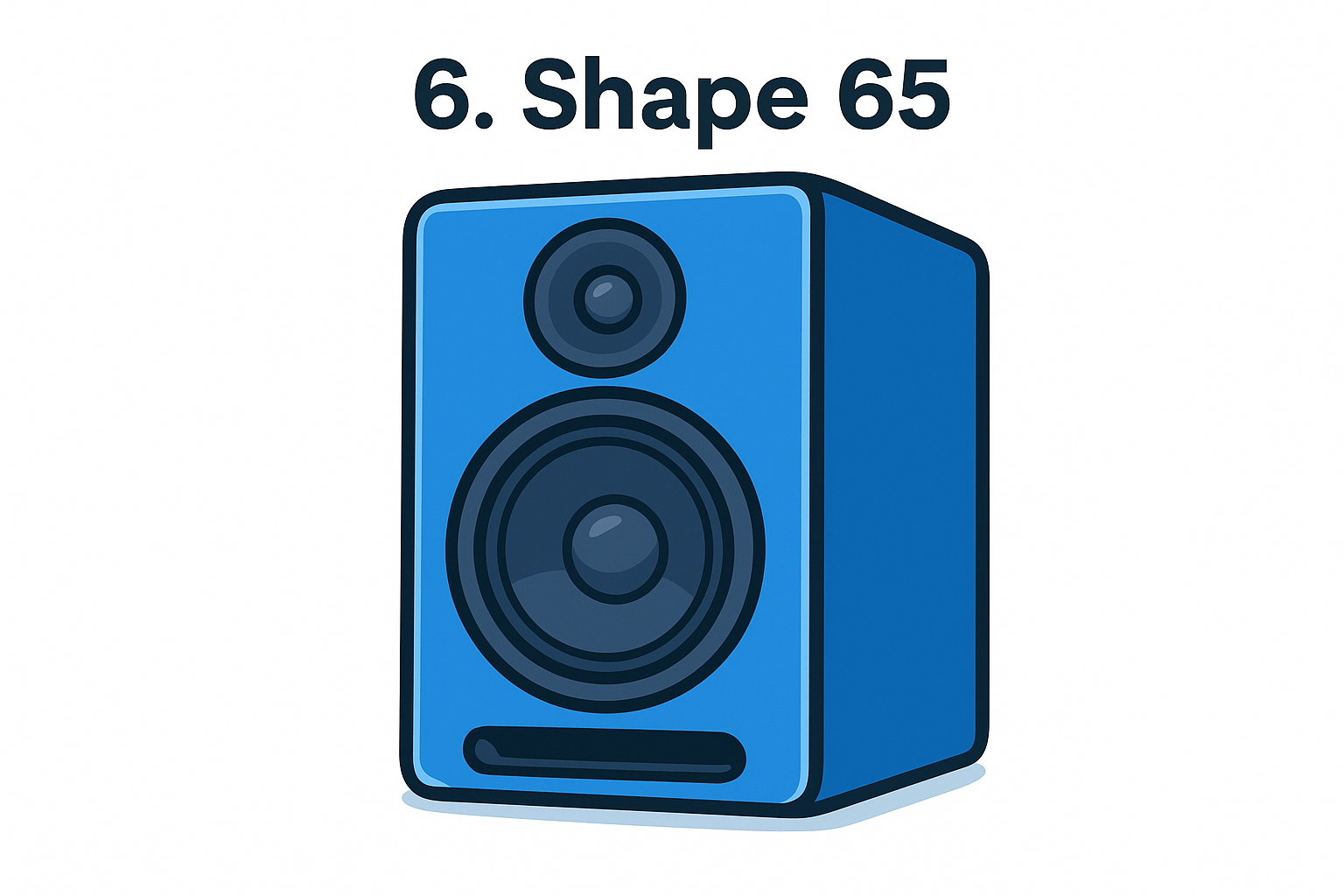
6. Shape 65
The Shape 65 expands on what the Shape 50 delivers by pairing a larger woofer with the same inverted dome tweeter design, giving you more low-end extension and SPL headroom while keeping the aesthetic and acoustic philosophy of the Shape line intact. If you found the Shape 50 compelling but need more bass presence in your monitoring chain, this is the logical next step.
Key specs at a glance
Inside the Shape 65 sits a 6.5-inch woofer alongside a 1-inch aluminum inverted dome tweeter, driven by 105W of total amplification. Frequency response runs from 40Hz to 35kHz, pushing low-end reach down while maintaining the extended high-frequency ceiling that defines the Shape series. The front-facing bass port carries over from the Shape 50.
|
Spec
|
Detail
|
|
Woofer
|
6.5-inch
|
|
Tweeter
|
1-inch aluminum inverted dome
|
|
Total Power
|
105W
|
|
Frequency Response
|
40Hz to 35kHz
|
|
Inputs
|
XLR balanced, RCA unbalanced
|
What it sounds like for EDM production and mixing
That larger woofer gives the Shape 65 a more substantial low-frequency foundation than the Shape 50, making it noticeably more capable when monitoring bass-heavy EDM arrangements. Your inverted dome tweeter still resolves fine high-frequency detail with the same extended clarity across synth layers, reverb tails, and transient-rich percussion content.
Among focal studio monitors in the Shape series, the Shape 65 strikes the best balance between low-end output and high-frequency resolution for medium room EDM production.
Best room size and placement notes
Position the Shape 65 in medium rooms up to approximately 300 square feet. Its front-facing port gives you the same wall-placement flexibility as the Shape 50, so you can set it on a desk close to a rear wall without triggering significant bass buildup.
Typical US price and where to buy
Expect to pay around $699 per monitor in the US, placing a stereo pair near $1,398. You can find them through major music retailers and on Amazon.
7. Shape Twin
The Shape Twin combines the twin-woofer layout of the Alpha Twin Evo with the inverted dome tweeter technology that defines the Shape series, giving you a monitor that prioritizes both stereo imaging and extended high-frequency detail in one enclosure. Producers who work with densely layered EDM arrangements will appreciate what this design brings to collaborative or wider listening setups.
Key specs at a glance
The Shape Twin runs two 5-inch woofers alongside a 1-inch aluminum inverted dome tweeter, driven by 105W of total amplification. Frequency response extends from 40Hz to 35kHz, matching the low-end reach of the Shape 65 while pushing high-frequency extension to the same ceiling that makes the Shape series stand out among focal studio monitors. A front-facing bass port carries over from the rest of the Shape line.
|
Spec
|
Detail
|
|
Woofers
|
Two 5-inch
|
|
Tweeter
|
1-inch aluminum inverted dome
|
|
Total Power
|
105W
|
|
Frequency Response
|
40Hz to 35kHz
|
|
Inputs
|
XLR balanced, RCA unbalanced
|
What it sounds like for EDM production and mixing
The dual woofers spread bass energy more evenly across your listening area, keeping low-frequency elements stable and well-defined even when you shift position slightly. Your inverted dome tweeter resolves fine high-frequency content with the same airy, extended clarity found across the Shape range.
The twin-woofer and inverted dome combination makes this monitor particularly effective for tracking complex layered synth arrangements where both imaging and tonal accuracy matter.
Best room size and placement notes
The Shape Twin performs well in medium rooms up to approximately 320 square feet. Position it 4 to 6 feet from your listening position with the tweeter at ear level, and use the front-facing port to place it closer to walls when needed.
Typical US price and where to buy
The Shape Twin typically costs around $999 per monitor in the US, placing a stereo pair near $1,998. You can purchase through major music retailers or on Amazon.
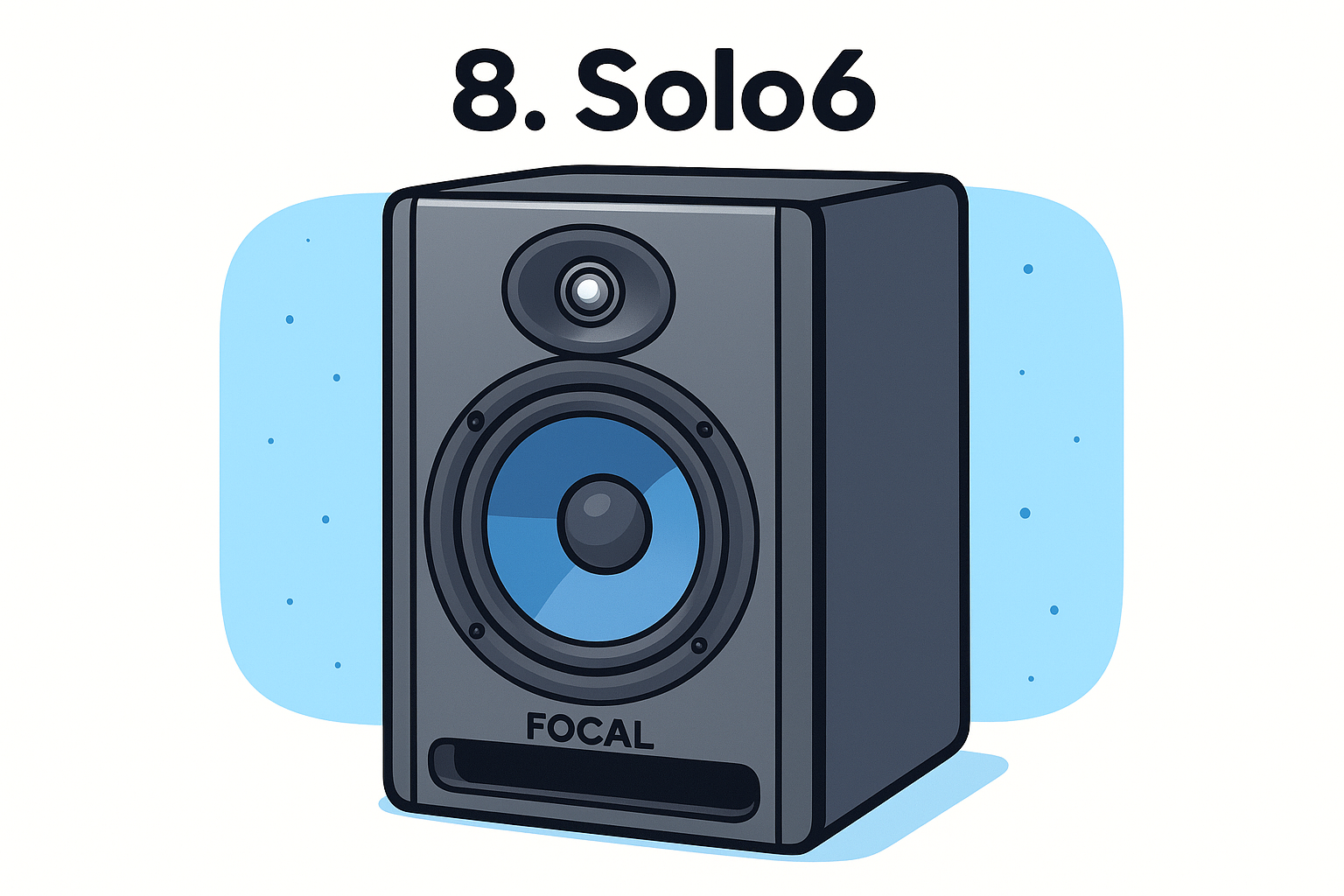
8. Solo6
The Solo6 moves Focal into its professional monitoring tier, built explicitly for studios that demand the highest level of accuracy and transient resolution during critical mixing and mastering sessions. Where the Alpha and Shape lines serve home producers and working professionals, the Solo6 targets environments where monitoring precision is non-negotiable.
Key specs at a glance
The Solo6 houses a 6.5-inch woofer paired with a 1-inch beryllium inverted dome tweeter, driven by 150W of total amplification. That beryllium tweeter is the defining feature here, extending frequency response all the way to 40Hz to 40kHz, a ceiling that no other monitor in this list matches. Its rear-ported enclosure requires more attention to room placement than front-ported designs.
|
Spec
|
Detail
|
|
Woofer
|
6.5-inch
|
|
Tweeter
|
1-inch beryllium inverted dome
|
|
Total Power
|
150W
|
|
Frequency Response
|
40Hz to 40kHz
|
|
Inputs
|
XLR balanced
|
What it sounds like for EDM production and mixing
Beryllium is significantly stiffer and lighter than aluminum, which means the tweeter moves faster and resolves ultra-fine high-frequency detail that aluminum dome designs simply cannot reproduce. Your synth overtones, reverb trails, and layered atmospheric textures come through with a level of clarity that separates these focal studio monitors from every other model in this guide.
The 40kHz upper extension means you hear content that most monitors roll off entirely, giving you a more complete picture of your mix at the mastering stage.
Best room size and placement notes
Position the Solo6 in medium to large treated rooms up to 430 square feet. Keep your listening triangle 5 to 7 feet from the monitors, and give the rear port adequate clearance from back walls to prevent low-frequency buildup.
Typical US price and where to buy
The Solo6 runs approximately $1,499 per monitor in the US, placing a stereo pair near $2,998. Purchase through major music retailers or on Amazon.
9. Trio11 Be
The Trio11 Be sits at the absolute top of Focal's studio monitor lineup. This three-way active monitor is built for professional studios where full-range reproduction and surgical mix accuracy are the baseline expectation, not a luxury. If you're producing and mastering high-level EDM at a professional standard, this monitor gives you a complete picture of your mix that very few other focal studio monitors on the market can match.
Key specs at a glance
The Trio11 Be runs a three-way configuration combining an 11-inch woofer, a 5-inch midrange driver, and a 1-inch beryllium inverted dome tweeter, powered by 400W of total amplification. Frequency response extends from 30Hz to 40kHz, covering everything from sub-bass movement to the uppermost limits of human hearing and beyond.
|
Spec
|
Detail
|
|
Woofer
|
11-inch
|
|
Midrange
|
5-inch
|
|
Tweeter
|
1-inch beryllium inverted dome
|
|
Total Power
|
400W
|
|
Frequency Response
|
30Hz to 40kHz
|
|
Inputs
|
XLR balanced
|
What it sounds like for EDM production and mixing
The dedicated midrange driver keeps vocals, synth leads, and mid-frequency detail completely isolated from both the woofer and tweeter, which eliminates the crossover smearing that two-way monitors cannot avoid. Your bass layers, mids, and highs stay clearly separated and individually resolved throughout the entire frequency spectrum.
The three-way design gives you a level of mix transparency that reveals problems other monitors mask entirely.
Best room size and placement notes
The Trio11 Be requires a large, properly treated room of at least 500 square feet to perform correctly. Place it 6 to 10 feet from your listening position with adequate rear-wall clearance.
Typical US price and where to buy
The Trio11 Be runs approximately $5,499 per monitor in the US, placing a stereo pair near $10,998. You can find them through major professional audio retailers or on Amazon.
Next steps
Nine focal studio monitors reviewed, one clear takeaway: the right pair depends entirely on your room size, your budget, and how deep into the mixing chain you actually work. If you're building out a home studio, the Alpha 50 Evo or Shape 50 give you accurate monitoring without stretching your budget past its limit. If you run a professional setup where mastering decisions happen daily, the Solo6 or Trio11 Be deliver the resolution and transparency those sessions demand.
Match the monitor to your room size using the placement notes in each section, confirm your budget covers a full stereo pair, and order through a retailer that offers a return window so you can test them in your actual space.
While you dial in your new monitors, you'll need high-energy reference tracks to push them through the full frequency range. Check out the
8