7 Best Audio Interface Options for Beginners (2026)
Every EDM track you hear, from a festival mainstage banger to a bedroom lo-fi edit, started with someone recording or routing audio through an interface. If you're an aspiring producer ready to lay down your first beats, finding the best audio interface for beginners can feel overwhelming. Dozens of options exist across every price point, and the spec sheets alone are enough to make your eyes glaze over.
Here at RIKIO ROCKS, we cover the EDM scene from every angle, and that includes the gear that powers it. Your audio interface is the bridge between your ideas and your DAW, handling everything from microphone inputs to instrument monitoring and studio-quality playback. Choosing the wrong one can mean dealing with latency, noise, or driver headaches that kill your creative flow before it starts.
We pulled together seven interfaces that actually make sense for someone just getting started. Each pick balances sound quality, ease of use, build, and price, so you can stop researching and start producing. Let's get into it.
1. Focusrite Scarlett 2i2 4th Gen
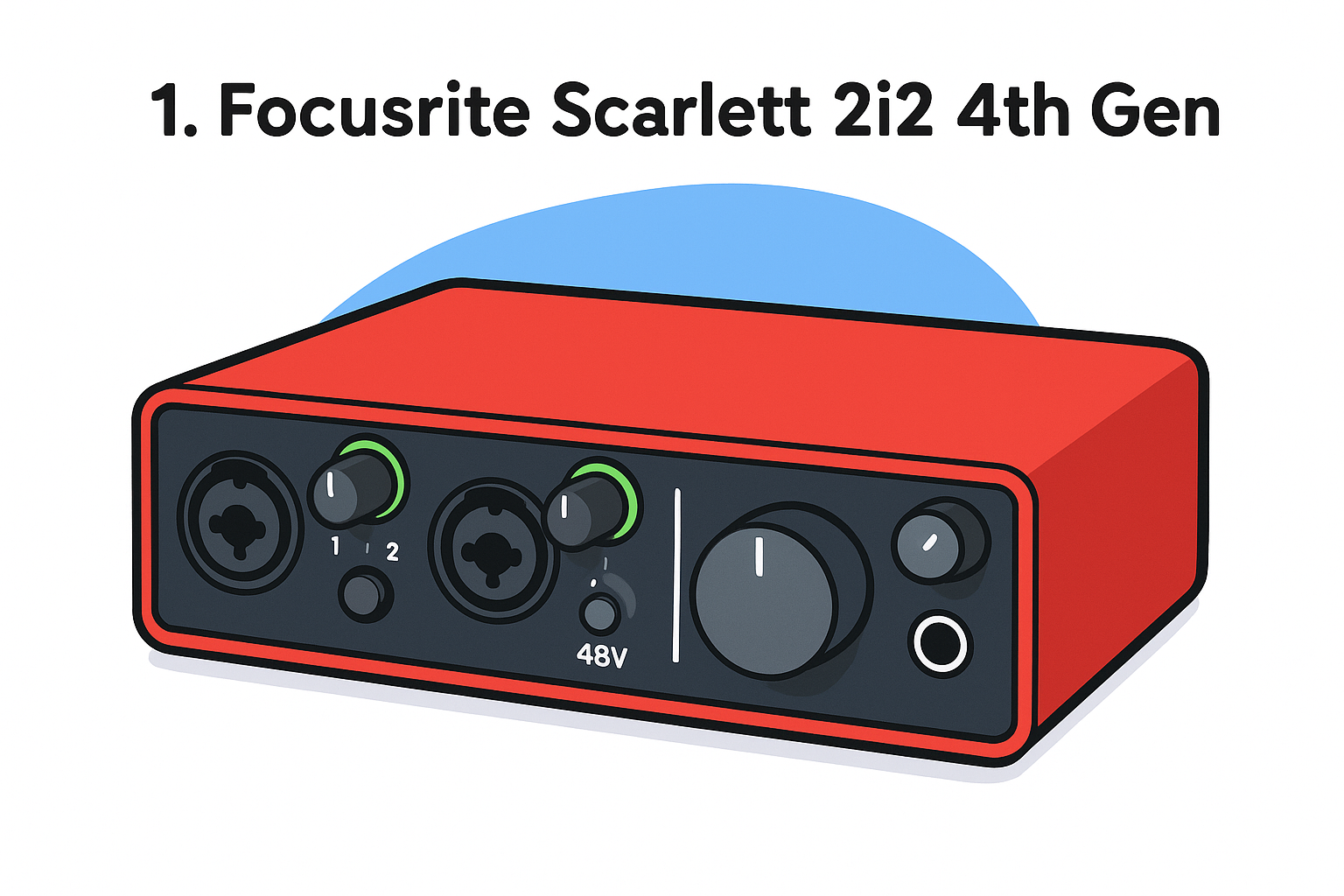
The Scarlett 2i2 has been the go-to starting point for home studio builders for over a decade, and the 4th Gen version only strengthens that reputation. Focusrite refined every aspect of what made the previous versions reliable while adding meaningful hardware upgrades that push it well above what you'd expect at this price.
Best for
The 2i2 works best for solo producers and singer-songwriters who need two clean inputs to record vocals, guitar, or a small synth setup simultaneously. If you're building your first home studio and searching for the best audio interface for beginners without overspending, this is the most proven and well-supported option on the market.
Key specs and I/O that matter for beginners
The 4th Gen ships with two combo XLR/TRS inputs, redesigned preamps with lower noise and higher headroom than the 3rd Gen, 48V phantom power for condenser mics, and two balanced TRS outputs for studio monitors. It runs bus-powered over USB-C with no separate power brick needed.
The 4th Gen preamps measure at a dynamic range of 111 dB, a noticeable jump from 109 dB on the 3rd Gen, which puts it in range of interfaces costing twice as much.
Key specs at a glance:
-
Preamp dynamic range: 111 dB
-
Inputs: 2x combo XLR/TRS
-
Outputs: 2x balanced TRS + headphone out
-
Sample rate: Up to 192 kHz / 24-bit
-
Connection: USB-C (bus-powered)
What you'll like in day-to-day use
Setup is fast. Plug it in, install Focusrite Control, and you're tracking within minutes on both Mac and Windows. The Air mode on each input adds a subtle high-frequency lift that emulates Focusrite's ISA transformer preamps, giving vocals and acoustic instruments a presence boost without touching plugins.
Your direct monitoring knob blends DAW playback with your live input, which kills the latency problem that trips up most first-time recorders.
Watch-outs before you buy
Two inputs is the hard limit here, so if you plan to mic a full drum kit or record multiple players at once, you'll outgrow this quickly. There is also no MIDI I/O, which matters if you want to connect hardware synths or drum machines without a separate adapter.
Typical price range in 2026
The Scarlett 2i2 4th Gen retails at around $149 to $169 USD at major retailers. Focusrite regularly bundles it with Ableton Live Lite and a plugin package, which adds real value for anyone starting from scratch.
2. Audient iD4 MKII
The Audient iD4 MKII borrows preamp technology directly from Audient's professional mixing console lineup, which is unusual for an interface at this price point. If the Scarlett 2i2 is the safe pick, this is the choice for producers who want a higher-end audio path from day one without jumping to a pro-level price tag.
Best for
The iD4 MKII suits solo producers, podcasters, and vocalists who record one source at a time and want cleaner, more transparent preamp sound. It is a strong contender when you are searching for the best audio interface for beginners who prioritize preamp quality above all else.
Key specs and I/O that matter for beginners
You get one combo XLR/TRS input and one instrument DI input, 48V phantom power, and a dedicated headphone amplifier. The USB-C connection runs bus-powered at up to 96 kHz / 24-bit.
-
Preamp: Console-derived Class-A design
-
Inputs: 1x XLR/TRS combo + 1x instrument DI
-
Outputs: 2x balanced TRS + headphone out
-
Sample rate: Up to 96 kHz / 24-bit
-
Connection: USB-C (bus-powered)
What you'll like in day-to-day use
The large monitor volume knob on the front panel gives you smooth, precise control over your listening level. Audient also includes a ScrollControl feature that turns that same knob into a DAW navigation tool, saving real time during sessions.
The Class-A preamp handles gain-hungry dynamic microphones with noticeably less noise than most interfaces in this price range.
Watch-outs before you buy
Recording only one mic input at a time is a hard ceiling here. If you want to track two microphones simultaneously down the road, you will need to upgrade to a two-input unit. The 96 kHz maximum sample rate is also lower than rivals that reach 192 kHz, though this gap rarely affects beginners in practice.
Typical price range in 2026
The iD4 MKII typically sells for $149 to $179 USD. Audient bundles it with Cubase LE and a selection of plugins, giving you a complete starting setup right out of the box.
3. Solid State Logic SSL 2 and SSL 2 Plus
SSL built its name on recording consoles that shaped some of the most iconic albums in history. The SSL 2 packages that engineering heritage into a compact, affordable interface, and the SSL 2 Plus expands on it with MIDI I/O and a second headphone output for producers who need slightly more connectivity from day one.
Best for
The SSL 2 suits producers and vocalists who want a recognizable studio brand behind their setup. It ranks among the stronger picks for the best audio interface for beginners who want a distinct hardware feature alongside professional heritage in one affordable box.
Key specs and I/O that matter for beginners
Both models include two combo XLR/TRS inputs with 48V phantom power, USB-C bus power, and balanced stereo outputs. The 4K Legacy mode circuit comes built into both units.
-
Inputs: 2x combo XLR/TRS
-
Outputs: 2x balanced TRS + headphone out (SSL 2 Plus adds a second headphone out and MIDI I/O)
-
Sample rate: Up to 192 kHz / 24-bit
-
Connection: USB-C (bus-powered)
What you'll like in day-to-day use
The 4K Legacy mode switch applies subtle harmonic saturation borrowed from the SSL 4000 console circuit, making your recordings feel warmer and more present without loading up analog emulation plugins.
That built-in harmonic character is something producers usually chase through stacked plugin chains, and SSL delivers it directly in the hardware at this price.
Watch-outs before you buy
Windows driver stability has been a reported issue across some firmware versions, so check current user reviews before purchasing. The included software bundle is also lighter than what Focusrite or Audient package with their competing units.
Typical price range in 2026
The SSL 2 retails for around $149 to $169 USD, while the SSL 2 Plus runs $199 to $229 USD. Both ship with Ableton Live Lite and a plug-in selection.
4. Arturia MiniFuse 2
Arturia built its name in software synthesis and MIDI controllers before entering the audio interface market, but the MiniFuse 2 arrived with serious intent. It packs a compact design, solid preamps, and an unusually strong software bundle into a unit that competes directly with the most established names in this price bracket.
Best for
The MiniFuse 2 fits producers and beatmakers who want a clean two-input setup with tight integration into Arturia's software ecosystem. It is a solid pick as the best audio interface for beginners who already use or plan to explore Arturia's synth plugins and virtual instruments alongside their recording workflow.
Key specs and I/O that matter for beginners
The MiniFuse 2 gives you two combo XLR/TRS inputs, 48V phantom power, a headphone output with its own dedicated volume control, and balanced stereo outputs for monitors. It runs bus-powered over USB-C and supports sample rates up to 192 kHz at 24-bit.
-
Inputs: 2x combo XLR/TRS
-
Outputs: 2x balanced TRS + headphone out
-
Sample rate: Up to 192 kHz / 24-bit
-
Connection: USB-C (bus-powered)
What you'll like in day-to-day use
The direct monitoring blend knob handles your input-to-DAW balance without any software menu navigation. Arturia also includes a loopback function built directly into the hardware, which makes capturing streaming audio or sampling from other applications on your computer fast and clean.
The bundled Analog Lab Intro and Ableton Live Lite package is one of the more generous software inclusions at this price, giving you playable sounds and a working DAW right out of the box.
Watch-outs before you buy
The MiniFuse Control Center software, which manages routing and monitoring settings, has received mixed feedback for stability on certain Windows configurations. Check the current firmware release notes before purchasing to confirm your setup is fully supported.
Typical price range in 2026
The MiniFuse 2 retails for around $109 to $129 USD, making it one of the more budget-friendly two-input options on this list without a meaningful sacrifice in build quality or audio performance.
5. MOTU M2
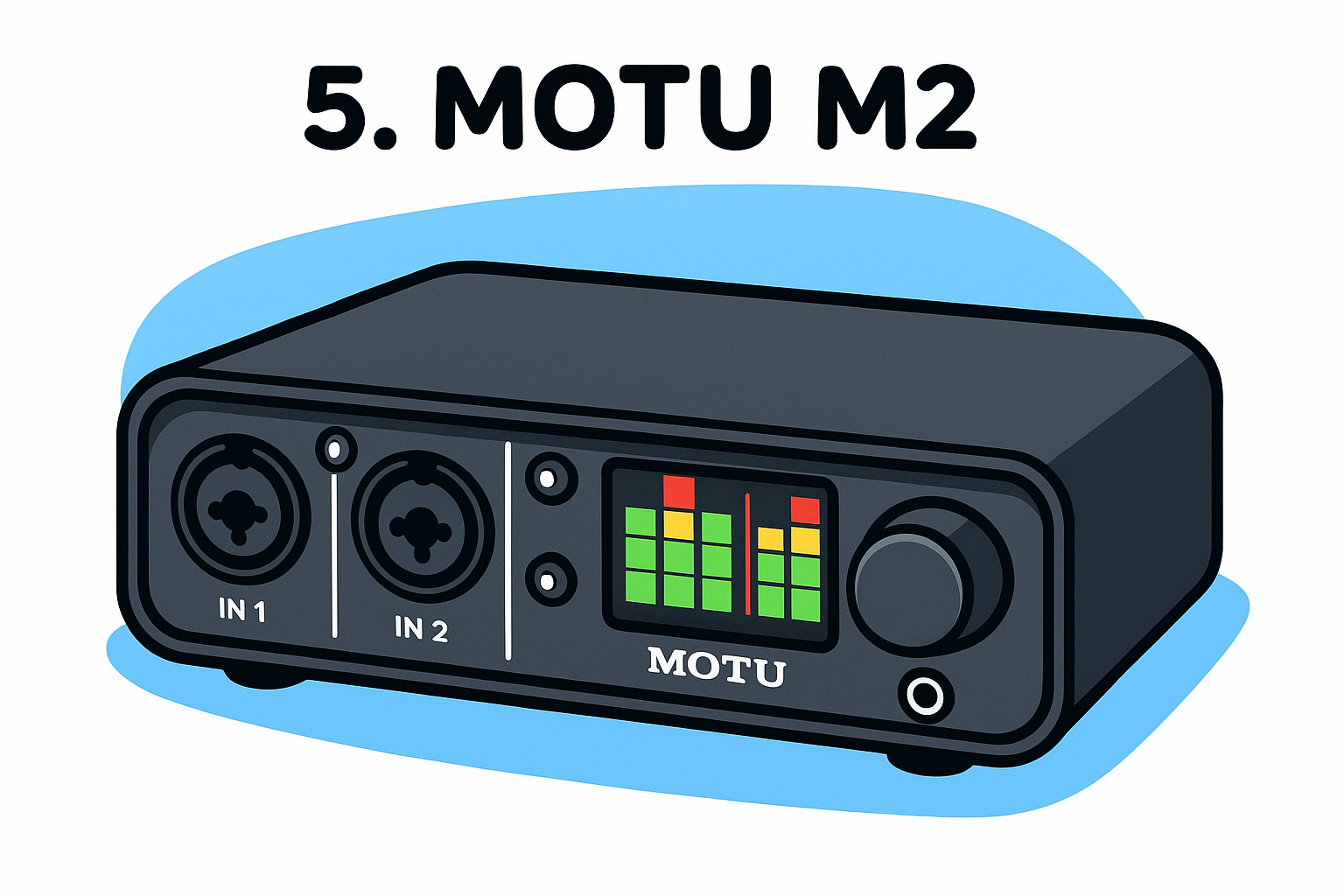
The MOTU M2 stands out from most beginner interfaces with one feature: real-time level meters. MOTU built full-color LCD meters directly into the front panel, giving you instant visual feedback on input and output levels without touching your DAW screen.
Best for
The M2 suits detail-oriented producers and home studio beginners who want accurate visual gain monitoring alongside clean audio. It ranks as a strong pick for the best audio interface for beginners who prioritize converter quality over a generous software bundle.
Key specs and I/O that matter for beginners
You get two combo XLR/TRS inputs, 48V phantom power, and balanced stereo outputs. The ESS Sabre32 Ultra converters push audio quality noticeably above what you expect at this price point.
-
Inputs: 2x combo XLR/TRS
-
Outputs: 2x balanced TRS + headphone out
-
Sample rate: Up to 192 kHz / 24-bit
-
Connection: USB-C (bus-powered)
What you'll like in day-to-day use
Those full-color meters update in real time, so you can dial in your gain before hitting record without jumping between hardware and screen. MOTU also carries a strong track record for stable drivers across Mac and Windows, cutting down on setup headaches during early sessions.
The ESS converter quality at this price point is genuinely competitive with interfaces that cost significantly more.
Watch-outs before you buy
Bundled software here is noticeably thin compared to what Focusrite or Arturia include with competing units, so plan on sourcing a separate DAW if you don't already have one. There is also no MIDI I/O on the M2, which limits direct hardware synth connections without an adapter.
Typical price range in 2026
The MOTU M2 retails for around $169 to $199 USD. The lighter software package means the price reflects the hardware and converter quality directly, which is a fair trade for the performance you get under the hood.
6. PreSonus Studio 24c and Quantum ES 2
PreSonus offers two distinct options depending on where your budget sits. The Studio 24c covers the affordable end with a reliable two-input layout, while the Quantum ES 2 steps up with improved converters and a cleaner headphone amp for producers who want more headroom from the start.
Best for
Both units work well for solo producers and podcasters who want solid PreSonus ecosystem integration. The Studio 24c is a strong pick for the best audio interface for beginners on a tighter budget, while the Quantum ES 2 suits those ready to invest a bit more for noticeably better output quality.
Key specs and I/O that matter for beginners
Each model ships with two combo XLR/TRS inputs, 48V phantom power, and USB-C bus power. The Quantum ES 2 adds improved converter performance and a more powerful headphone output.
-
Inputs: 2x combo XLR/TRS
-
Outputs: 2x balanced TRS + headphone out
-
Sample rate: Up to 192 kHz / 24-bit
-
Connection: USB-C (bus-powered)
What you'll like in day-to-day use
PreSonus bundles both units with Studio One Artist, a full-featured DAW that goes well beyond the Lite versions most competitors include. That software alone adds real value to your purchase and gives you a complete recording environment without additional cost.
Getting a full DAW tier rather than a Lite version is a meaningful advantage over most competing bundles at this price.
Watch-outs before you buy
The preamp headroom on the Studio 24c can feel limited when recording gain-hungry dynamic microphones. If you plan to use a demanding mic regularly, the Quantum ES 2 is worth the upgrade.
Typical price range in 2026
The Studio 24c retails for around $99 to $119 USD, while the Quantum ES 2 runs $199 to $229 USD, making both units competitive within their respective price brackets.
7. Behringer U-Phoria UMC204HD
The Behringer U-Phoria UMC204HD sits at the bottom of the price ladder without completely sacrificing the basics. It uses MIDAS-designed preamps, a detail Behringer emphasizes heavily, and includes MIDI I/O that most interfaces at this price point drop entirely.
Best for
Budget-focused beginners who need a functional two-input setup at the lowest possible entry point will get the most out of this unit. If you are hunting for the best audio interface for beginners on a strict budget and plan to upgrade after your first year of production, the UMC204HD gets you recording without a large upfront investment.
Key specs and I/O that matter for beginners
You get two combo XLR/TRS inputs, 48V phantom power, MIDI I/O, and balanced stereo outputs. It connects over USB-A rather than USB-C, which is worth noting if your computer only has newer ports.
-
Inputs: 2x combo XLR/TRS + MIDI in/out
-
Outputs: 2x balanced TRS + headphone out
-
Sample rate: Up to 192 kHz / 24-bit
-
Connection: USB-A (bus-powered)
What you'll like in day-to-day use
The MIDAS preamp circuit handles clean vocals and guitar without obvious noise at normal gain levels. Having built-in MIDI I/O also means you can connect a keyboard or hardware synth directly without purchasing a separate adapter.
Getting MIDI I/O at this price point is rare, and it removes one extra purchase from your initial setup list.
Watch-outs before you buy
Build quality is noticeably plastic compared to metal-chassis competitors at similar or slightly higher prices. The bundled software is also minimal, so factor in the cost of a separate DAW if you do not already have one lined up.
Typical price range in 2026
The UMC204HD retails for around $49 to $69 USD, making it the most affordable option on this list by a significant margin.
Next steps
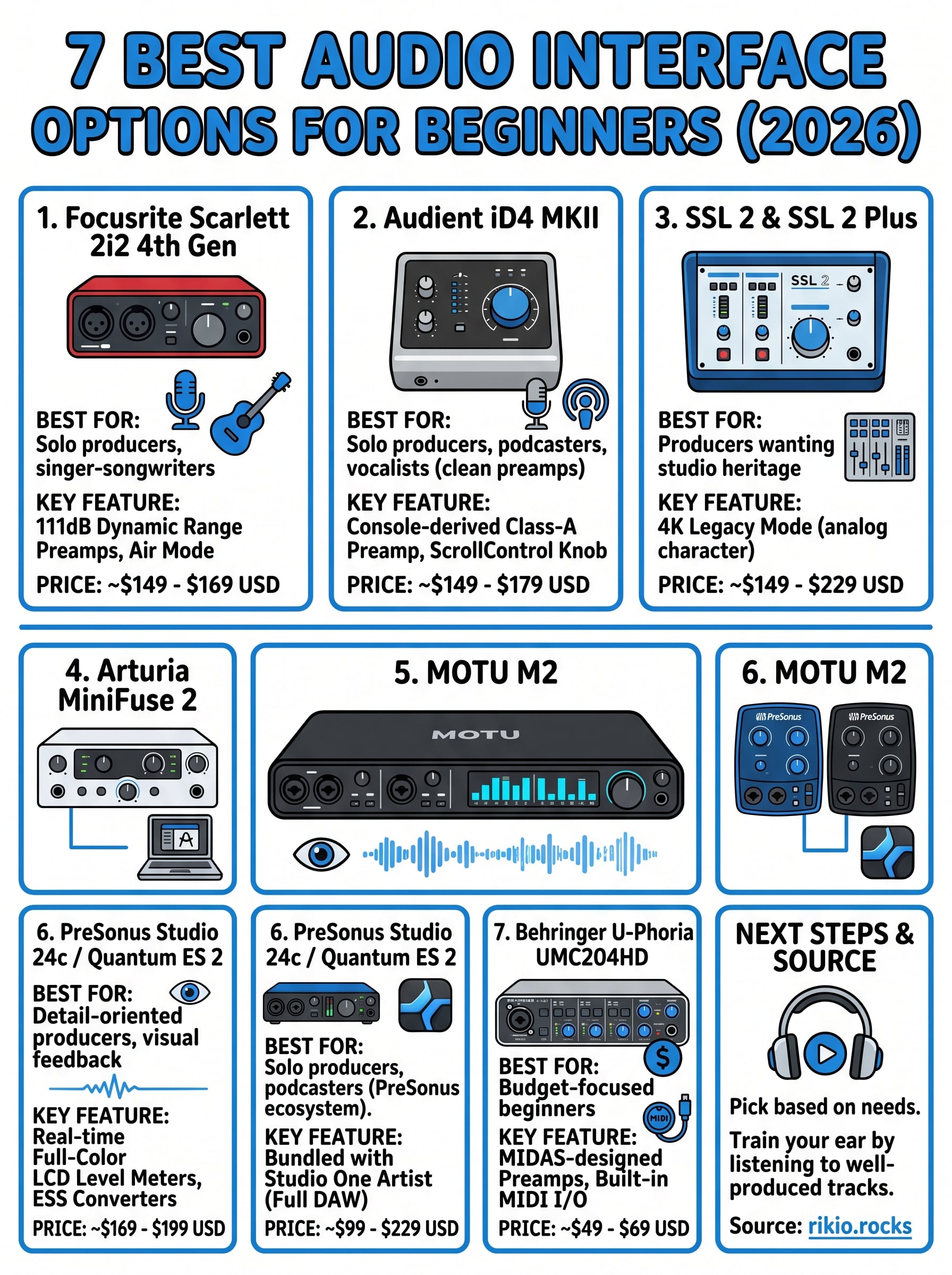
Now that you've seen the full breakdown, picking the best audio interface for beginners comes down to your specific needs. If you want the safest and most supported option, the Scarlett 2i2 4th Gen is hard to argue against. If preamp quality matters more than input count, the iD4 MKII or MOTU M2 deserve a closer look. Budget-first producers will get real value from the UMC204HD as a starting point before upgrading.
Once your interface is set up and your DAW is running, spend real time listening to well-produced tracks to train your ear for what great EDM actually sounds like. That listening habit will directly shape how you approach your own mixes and arrangement decisions. Your monitors or headphones will reveal details you've never caught before. If you want a ready-made playlist to study high-energy production, check out our CARDIO HITS 2026 playlist on Spotify and pay close attention to how the low end and dynamics are handled.
7